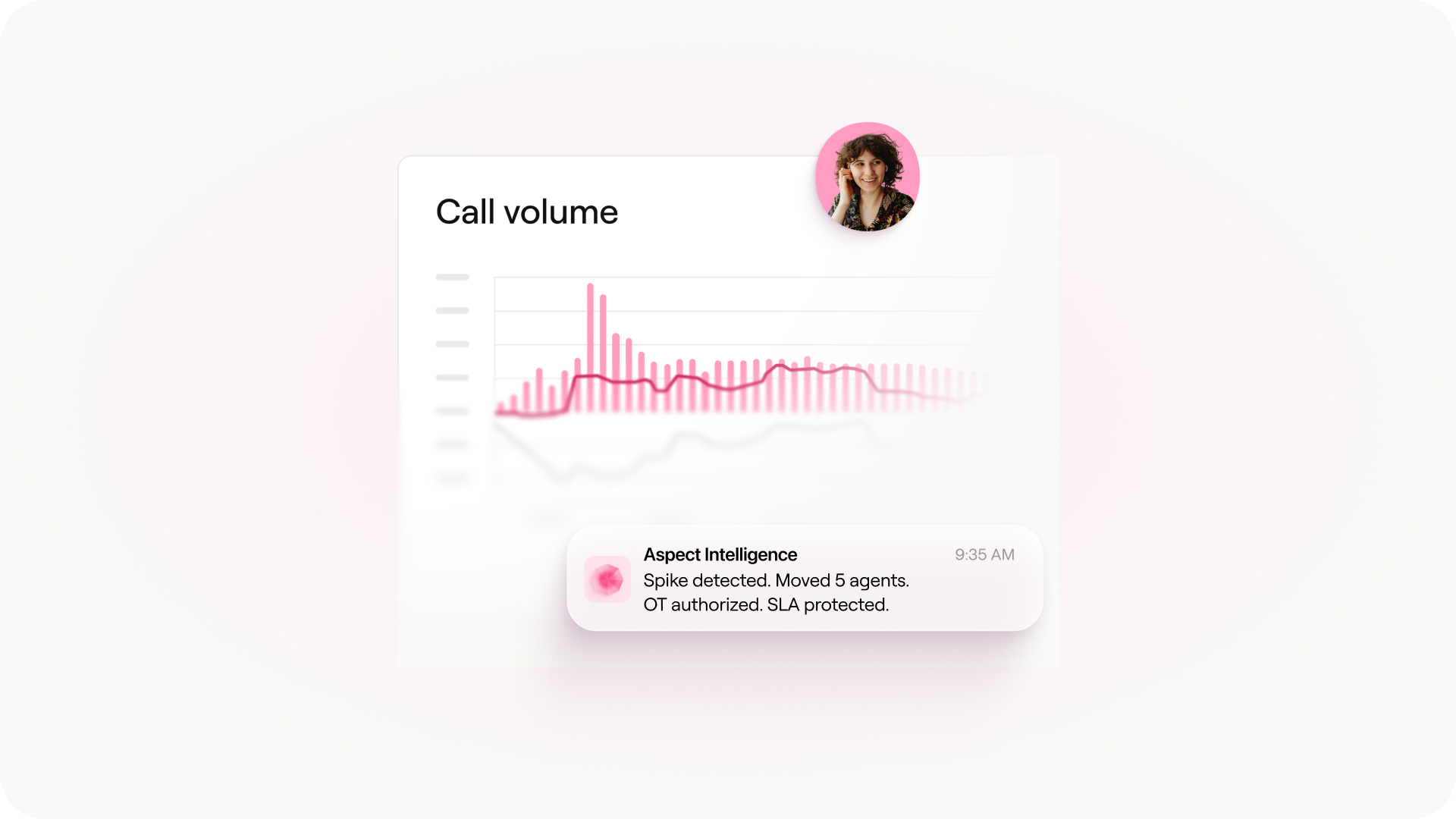



For most contact centers, "modernization" has meant layering new technology on top of an already crowded tech stack. Workforce management in one place. Quality in another. Coaching workflows in a third. A new AI layer on top.
On paper, it all looks like a single customer experience platform. In reality, leaders and supervisors are still bouncing between dashboards, exports, and point solutions that don't quite connect.
The result? Slow decisions, inconsistent coaching, and AI that creates more noise than change. It doesn't have to work that way.
Here's what happens when workforce, coaching, and AI finally work as one.
From fragmented stack to one performance system
Traditional “all‑in‑one” suites often grow through acquisition. Modules are stitched together over time, each with its own data model, UI, and roadmap.
Teams feel that fragmentation every day. Forecasting and staffing data live in one place, while QA results and transcripts live in another. Coaching plans sit in slides, email, or a separate system altogether.
Leaders get visibility, but not velocity. By the time someone pulls the right report, exports the data, and finds patterns worth acting on, another week (or quarter!) has gone by.
A connected performance system works differently. Instead of scattering workforce, quality, and AI across separate tools, it brings them into one continuous loop: from plan to performance.
Plan → Staff → Guide → Measure → Improve.
Forecasts inform schedules. Real‑time AI guidance shapes behavior on live interactions. Post‑interaction insights feed coaching, and that coaching feeds back into planning and staffing. Everything works together as one system, not a loose federation of tools.
Why AI alone is not enough
Over the last few years, many CX teams have invested in AI that sits on the side of operations: post‑call analytics, keyword alerts, or standalone assistants. The problem is that awareness isn’t the same as improvement.
Keyword-based analytics can show what was said, but they struggle with context and intent. Static rules and alerts create more noise for supervisors without clear next steps. Disconnected AI pilots rarely reach the front line, so daily behavior and KPIs barely change.
To drive real impact, AI has to plug into the full performance loop. It should understand behavior, guide agents in the moment, and make coaching easier, not overwhelm teams with another feed of insights.
When AI is woven into workforce and coaching, rather than bolted on top, it becomes the connective tissue of performance instead of just another dashboard.
Less hunting, more coaching
Ask any supervisor where their time goes, and you will hear a familiar pattern: “I spend too much time hunting for issues and not enough time coaching.”
In a fragmented stack, supervisors become the glue holding everything together. They jump between dashboards to see who's off their KPIs, dig through calls or transcripts to understand why, and then translate their findings into one-off coaching sessions or email feedback.
The work matters, but the process is slow and manual. Most of their day is spent hunting for issues rather than having high-impact coaching conversations.
An integrated workforce, AI, and coaching system changes that experience completely. Supervisors see the full picture in one place. No more piecing together stories from scattered tools. They know exactly where to focus their time.
- Unified visibility: Workforce and AI insights surface together, so supervisors see performance, behaviors, and trends in one place.
- Smart prioritization: AI highlights which agents and behaviors matter most for your key metrics, whether that's AHT, CSAT, conversion, or compliance.
- Guided workflows: Instead of starting from scratch, supervisors get clear next steps: who to coach, on what, and how it connects to business outcomes.
The shift is subtle but powerful. Supervisors spend less time searching for coaching opportunities and more time actually coaching.
Stability first, lift second
For many organizations, changing the workforce stack feels risky—the contact center is the heart of daily operations.
A connected workforce and AI approach reduces that risk by starting with stability. First, get forecasting, scheduling, and quality to a predictable place so leaders can reliably meet SLAs.
Once operations are steady, AI amplifies that foundation with real-time guidance for agents and behavior analytics that show where coaching will matter most.
The result? A faster, safer performance cycle where teams see lift in weeks, not quarters, and the operation is stable enough to absorb and benefit from ongoing change.
From tool sprawl to a predictable performance partnership
CX leaders face a noisy tech market where many stacks appear unified on paper but fail to connect in practice.
The better path? Focus on outcomes and ownership. Does the system truly close the loop from plan to performance? Who's accountable for making workforce, AI, and coaching work together?
When those elements work as one, you get a reliable performance backbone, fewer silos, and a clear line from executive priorities to frontline behavior.
What this looks like in practice
In practice, this starts by unifying your view of performance so workforce, QA, and AI insights tell one story instead of three.
With that shared picture, AI connects to the moments that matter most, guiding live interactions and surfacing behavior-level insights tied directly to the KPIs you care about.
Coaching becomes part of the everyday workflow. Supervisors know who to coach, what behavior to focus on, and how that work links to business outcomes. You keep getting better by focusing on the full loop: plan, staff, guide, measure, and improve, instead of adding yet another tool.
That's the promise of a predictable performance partnership, not just another platform.
Closing the loop with Aspect + Cresta
This vision of connected performance isn't theoretical. It's what happens when you bring enterprise workforce management together with an AI-powered coaching and quality platform.
Aspect delivers best-in-class forecasting, scheduling, and adherence, the operational backbone that keeps contact centers running. Cresta brings real-time AI guidance, automated QA, and behavior-level insights that make coaching faster and more effective.
Together, this partnership helps teams:
- Plan smarter: Use real performance data and behavior insights from Cresta to inform Aspect's forecasts and staffing models.
- Coach with clarity: Supervisors see workforce data and AI-driven coaching opportunities in one connected view, so they know exactly where to focus.
- Measure what matters: Quality scores, behavior trends, and KPI shifts feed back into workforce planning, creating a continuous improvement cycle.
Instead of juggling separate systems for workforce, quality, and AI, teams get one connected ecosystem where every part works together. No more hunting across dashboards. No more manual exports. Just a clear path from planning to performance.
It's workforce, coaching, and AI finally working as one.
Explore the Aspect + Cresta partnership and see how a unified workforce, AI, and coaching platform can elevate your contact center performance.