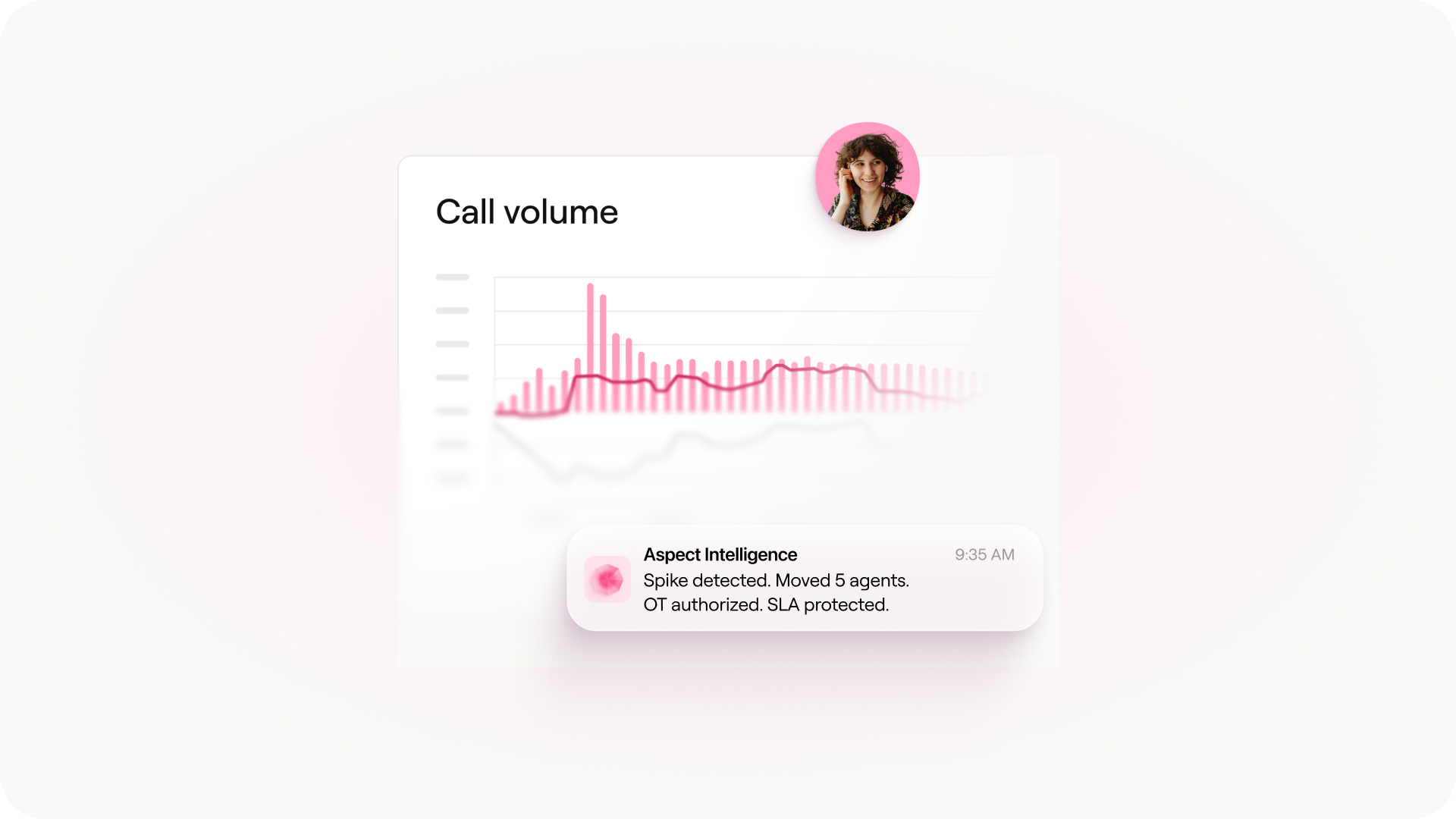
Forecasting accuracy has long been the gold standard in workforce management. But in today's operations, does accuracy alone provide the agility to act when things change?
Teams can have 90% accuracy and still struggle, or 80% and thrive.
So the real question isn’t “How accurate is your forecast?”
It’s: When is a forecast good enough to drive better decisions?
As contact centers evolve from cost centers to value engines, forecasting must evolve with them. Forecasting accuracy still matters, but operational agility is how leaders should measure success.
Accuracy isn’t the whole story
Forecasting value isn't determined by a few percentage points of precision alone. It's determined by:
- Whether the organization trusts the forecast.
- Whether teams can respond quickly when reality diverges from the plan.
- Whether forecast outputs align to the decision being made (long-term hiring vs. daily staffing vs. intraday adjustments).
A forecast is only as valuable as the decision it informs.
Chasing “perfect forecasts” can create paralysis. It also often consumes time, energy, and resources that could be invested elsewhere.
The practical model for modern operations isn't forecast-only. It's forecast + automation, so teams can detect variance faster and respond within guardrails that protect service, cost, and compliance.
The hidden cost of forecasting: The “Chaos Tax”
In forecasting, the real operational cost isn't the error itself. It's the lag between detection and response.
The Chaos Tax is the operational waste created by slow, manual reactions to inevitable variance.
It shows up as:
- Supervisors spending hours on reactive schedule changes instead of coaching.
- Over-forecasting driving unnecessary labor costs and idle time.
- Under-forecasting triggering overtime premiums and service risk.
- Manual intraday adjustments consuming large portions of the day.
- Response latency eroding the window to recover service levels.
Reducing the Chaos Tax often creates more measurable impact than improving forecast accuracy by a few points.
What modern forecasting should really deliver
If the real question is how forecasting drives better decisions, then operational leaders need a new definition of success. One that goes beyond a few points of accuracy.
They must focus on whether forecasting actually helps them make better decisions.
Here’s a few points that redefine “forecasting success”.
Trust comes first
If the team doesn't trust the forecast, they won’t act on it. They’ll override it, double-check it, or fall back on instinct when disruption occurs. Accuracy alone doesn’t build confidence. Transparency and consistency do. People need to understand why the forecast says what it says.
“Good enough” depends on the decision
One forecast standard does not fit all. A 90-day hiring forecast doesn’t require the same standards as intraday adjustments. The forecast needs to be as precise as the decision requires.
Speed matters more than small accuracy gains
Quickly detecting variance, running planning scenarios efficiently, and adjusting within clear guardrails often delivers more value than chasing marginal accuracy improvements.
Forecast + automation helping humans stay in control
Guardrail-based automation helps teams respond faster while keeping humans in control where judgment matters. The goal isn't automation for automation's sake. It's faster, smarter execution.
Uncertainty should be communicated, not hidden
Communicating ranges and confidence levels builds more credibility than presenting a false precision. Operational leaders make better decisions when they understand the boundaries of risk.
WFM forecasting: From planning function to strategic lever
Most days don't go as planned in contact centers and service operations. Volume spikes. Channel shifts. Digital escalations. Disruption is normal.
The organizations that thrive are those that adapt quickly when reality diverges from the plan.
That's when forecasting becomes a strategic capability. One that protects CX, controls costs, and builds operational resilience, ultimately transforming contact centers into value engines.
Aspect Intelligence™ embeds operational intelligence into forecasting, scheduling, and real-time management. It helps teams prevent disruption fast instead of reacting to it, without sacrificing trust, transparency, or compliance. Learn more: Aspect Intelligence: Embedded intelligence for modern Workforce Management.