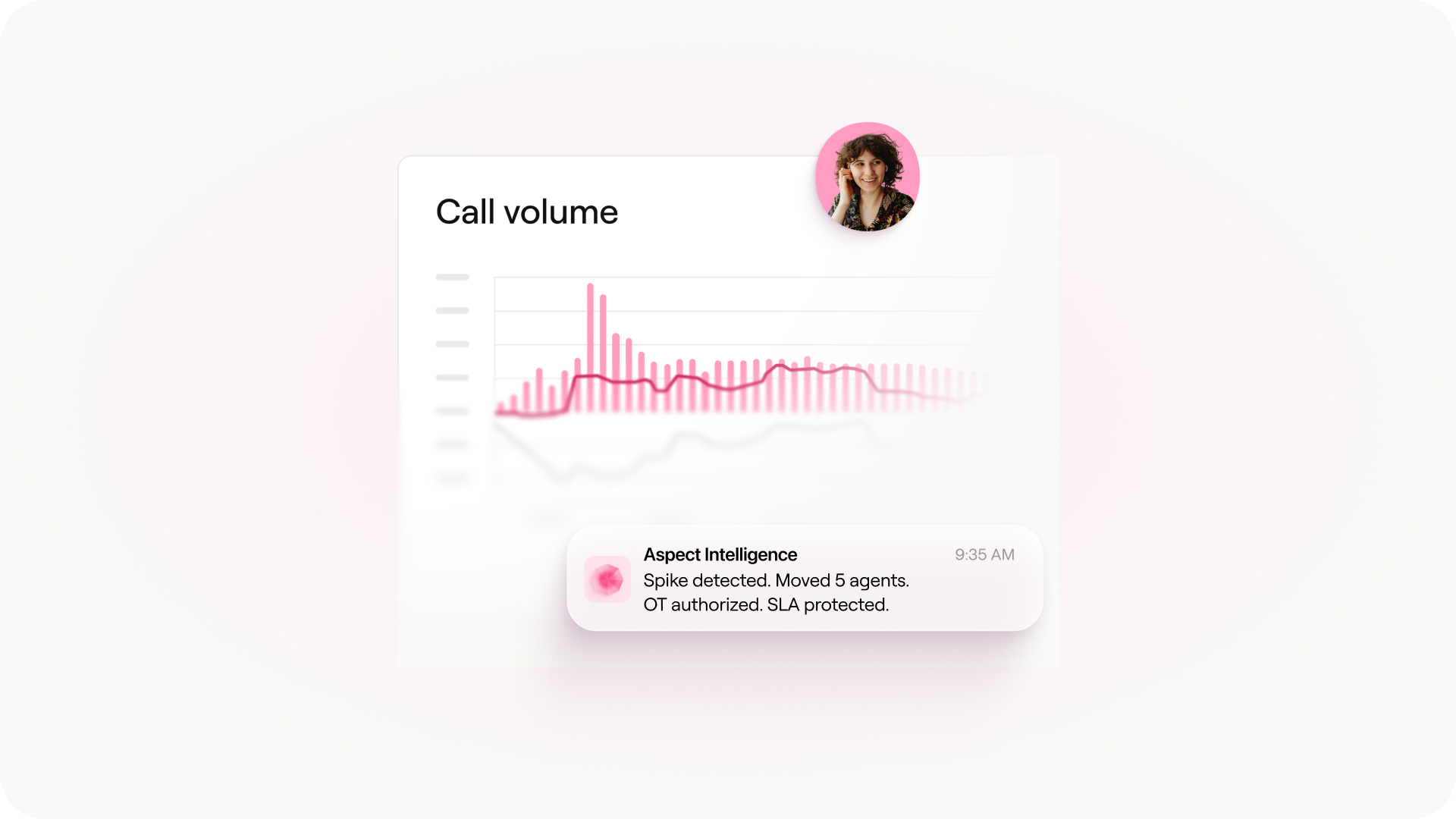


There is a quiet moment in most AI projects that never makes it into the case study. A team turns on a shiny new forecasting model, waits for the magic, and gets numbers that look worse than the analyst who has been doing this by hand for a decade. The model is doing its job. The trouble is that the data feeding it never agreed with itself in the first place.
This is the part of the AI story that vendors tend to skip. The demo always looks clean. The webinar promises accuracy and automation. Then the buyer gets home and discovers that handle time is defined four different ways across three systems, half the shrinkage never gets coded, and the channel mapping was last updated by someone who left in 2022.
Clean, connected data is turning into the real differentiator for AI in the contact center, and it is worth being honest about why. A forecast is only ever as good as the history behind it. Push a little further and the same holds for the guidance you give an agent or the automation you let run without a person watching. All of it rests on numbers you trust, and none of it shows up in a slick interface. That is exactly why so much of this gets ignored until it hurts.
Why do AI projects fail?
They fail on data readiness far more often than on model quality, and the research is fairly blunt about it. Gartner predicted that through 2026, organizations would abandon 60 percent of AI projects that were not supported by AI-ready data. The same research found that 63 percent of organizations either did not have the right data management practices for AI or were unsure whether they did, based on a survey of 248 data management leaders.
The gap between what a model needs and what most operations can give it is wider than people expect. Gartner's own enterprise AI survey found that over half of AI projects fail to reach production at all, with data issues named as the primary blocker for 40 percent of initiatives. Informatica's CDO research put a similar number on it, with data quality and readiness ranked as the top obstacle by 43 percent of organizations and only 12 percent reporting data of sufficient quality and accessibility for AI.
The cost of ignoring this compounds quietly. Gartner has put the annual cost of poor data quality at around $12.9 million for the average organization, and MIT Sloan research suggests bad data carries a 15 to 25 percent revenue impact. Those are enterprise-wide numbers rather than contact center numbers, but the mechanism is identical in a WFM context. A forecast built on shrinkage that was never coded properly produces a staffing plan that was wrong before anyone looked at it.
What data do you need before AI forecasting works?
Before you judge any AI model, it helps to look hard at the foundations it is standing on. A few questions worth asking:

Volume history. Do you have clean interval level history, and do you know which spikes were real demand versus an outage, botched routing, or a one time event that will never repeat?
Handle time. Is AHT measured the same way across channels and systems, and does everyone reporting on it mean the same thing when they say it?
Shrinkage. Are breaks, training, coaching, meetings, and offline work actually captured, or does a big slice of the day quietly disappear from the record?
Exceptions. When a plan changes intraday, is that change logged in a way a model can learn from later?
Channel mapping. Do voice, chat, messaging, and email roll up in a consistent structure, or does each one live in its own dialect?
If several of these feel shaky, that is not a reason to give up on AI. It is a map of the work that will make AI pay off. It is also a reasonable early warning system, because the operations that end up in Gartner's 60 percent are the ones that never ran this assessment before they bought.
Why does fixing data foundations improve results before AI gets involved?
Because the same problems that break a model were already breaking your planners. Tighten how shrinkage is captured and your forecasts stop drifting for reasons nobody could explain. Standardize handle time and suddenly two sites can actually be compared. Clean up the exception log and your planners stop arguing about what really happened last Tuesday.
Then, when you layer intelligence on top, the gains compound. Forecast accuracy improves by a few points, which sounds small until you translate it into agents you did not overstaff and service you did not miss. Adherence climbs because schedules finally reflect reality. Overtime and attrition ease off together, because a plan built on trustworthy numbers is a plan people can actually live inside.
There is an economics argument here that predates AI by decades. The old Sirius Decisions rule of thumb held that it costs a dollar to verify a record at the point of entry, ten dollars to clean it later, and a hundred dollars if you ignore it entirely. In a modern workforce stack where data syncs across a dozen systems, that multiplier only gets worse, because a bad shrinkage definition does not sit still. It propagates into the forecast, into the schedule, into the adherence report, and eventually into a conversation with a CFO who wants to know why the numbers moved.
Where should you start with WFM data cleanup?

Start with one metric that everyone already fights about, usually shrinkage or handle time, and get it defined and captured properly across the whole operation. Prove that the forecast gets steadier. Use that win to fund the next cleanup.
You do not need a two year data project before you see value, and attempting one is a good way to lose the budget before you finish. The organizations that reach production fastest tend to scope narrowly, fix the foundation for a specific use case, and demonstrate a measurable result before expanding. The ones that stall are usually trying to boil the ocean while their pilot quietly dies of irrelevance.
At Aspect we think about this as the groundwork under Aspect Intelligence. The intelligence layer is only ever as strong as the workforce data feeding it, so the unglamorous work of defining metrics cleanly and connecting systems that never spoke to each other is what turns an AI promise into a result you can defend to a CFO.
What this means for your AI strategy
The uncomfortable conclusion in all of this research is that the model is rarely the variable that decides the outcome. Data readiness is. As agentic systems take on more of the operation, that dependency tightens rather than loosens, since a system that acts on bad numbers does more damage than a system that merely reports them.
The teams that win with AI over the next few years will be the ones who did the quiet work of getting their data to tell the truth, long before the flashy model showed up.
- Why do most AI projects fail?

- What is AI-ready data?
- What data does WFM forecasting need?
- How much does poor data quality cost?
- Should you fix data before buying AI for WFM?