.gif)


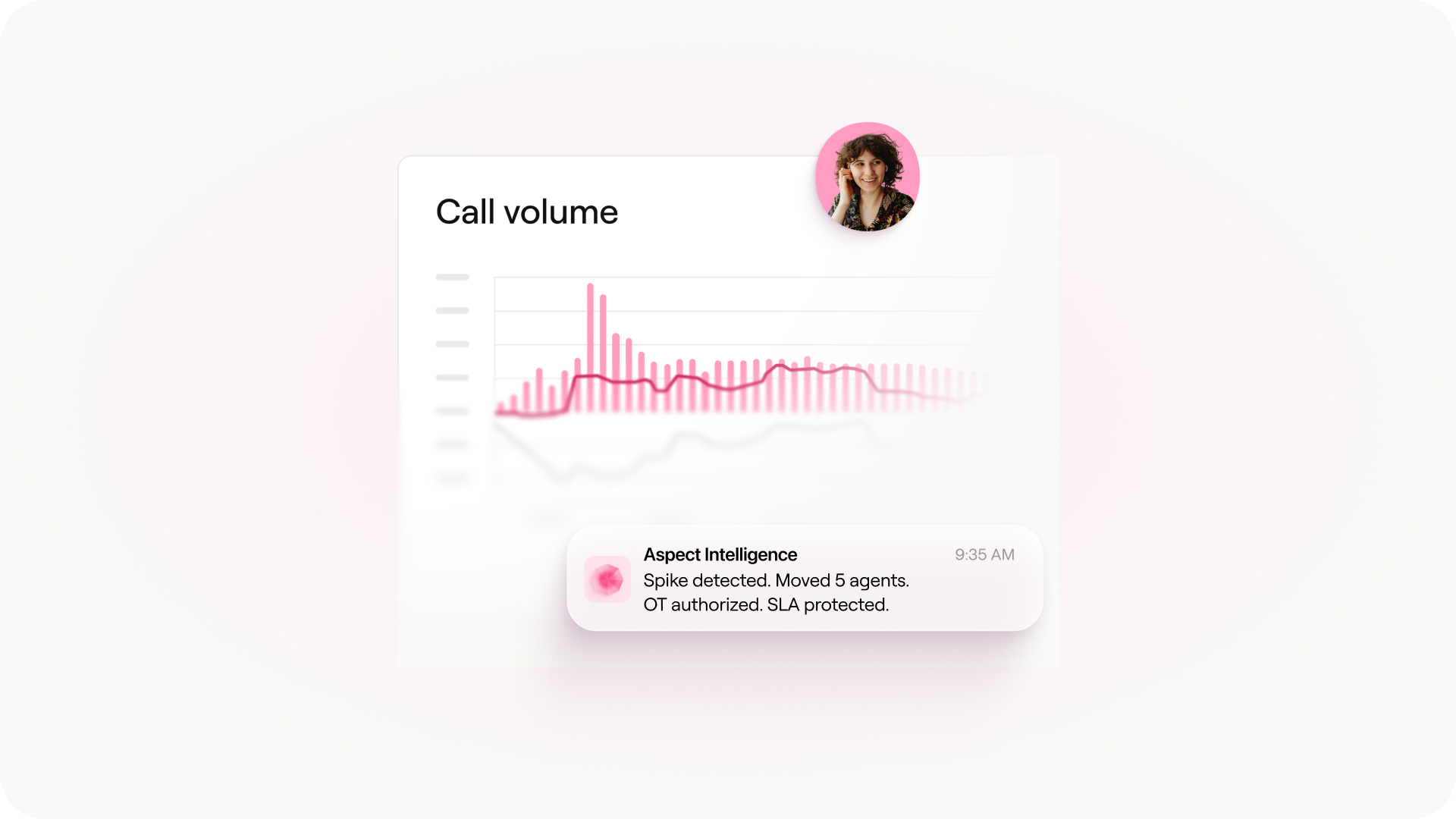
Ask a planner what Monday morning looks like and you will usually hear the same story. The schedule looked solid on Thursday. Then a promotional email went out three hours early, a payment system got sluggish in one region, and the sick calls started rolling in before the coffee was cold. By 9:15 the plan on paper had almost nothing to do with the day that was actually unfolding.
That distance between the plan and the day is where contact centers now live, and it is why workforce management is quietly turning into something it never used to be: a real-time control system rather than a weekly planning exercise. The value has moved from building a good plan to noticing and adjusting while the day is still happening. This is no longer a fringe view. Industry analysts now describe WFM as a primary driver of stability and customer experience rather than a back-office function, with forecasting and scheduling maturity treated as a competitive differentiator during demand volatility.

What does "always-on" workforce management actually mean?
Always-on is more than a dashboard that refreshes quickly. It is a continuous loop that runs all day and actually leads to action. That loop has four parts, and skipping any one of them is why most centers stall.
The first part is signals worth watching: offered volume against forecast, handle time drifting from plan, adherence slipping in a particular queue, a backlog forming in an async channel. Each of these is an early warning, but only if someone is looking.
The second is thresholds. A five percent forecast miss at 8am in one skill might be noise. The same miss holding for ninety minutes across three skills is a staffing problem that needs a decision. Naming those triggers ahead of time keeps the day from turning into pure reaction.
The third is the decision itself: move breaks, offer voluntary time off, pull in overtime, reskill a group toward the channel that is underwater. None of this matters unless someone owns the call and can make it quickly.
The fourth, and the one most centers skip, is ownership. Plenty of operations have all the data and still stall, because nobody is sure who is allowed to move fifty agents at 10am. Always-on falls apart without a clear answer to that question.
Why are contact centers moving away from fixed weekly schedules?
Volume no longer behaves in a way that a week-old plan can absorb. Customers move between chat, voice, email, and messaging without warning. AI is deflecting some contacts and quietly reshaping the ones that reach a person, which changes handle times in ways historical averages don't capture. Demand now swings in fifteen and thirty minute intervals, and a schedule built the previous Thursday simply cannot keep pace with that on its own.
The stakes behind that gap are climbing. Gartner projects conversational AI will strip roughly $80 billion out of contact center labor costs in 2026, even though only about one in ten interactions is automated today. As AI absorbs the simple, high-volume contacts, the ones that reach a human are longer and less predictable, which makes a static weekly forecast even less reliable than it used to be.
The shift mirrors what happened in other operations disciplines years ago. Manufacturing moved from batch planning to just-in-time. Logistics moved from fixed routes to dynamic routing. Contact center workforce management is making the same move now, from a plan you finish and defend to a system you steer through the day.
How do you run real-time scheduling without creating chaos?
This is the fear that keeps operators on fixed plans: if the schedule keeps moving, agents lose trust and supervisors spend the day explaining surprises. That risk is real, and it is usually a design problem rather than a reason to avoid intraday work.
Guardrails are what make constant adjustment livable. Set limits on how much any one person's day can change. Protect the commitments people planned their lives around, like a school pickup or a prebooked appointment. Route the bigger moves through a quick approval so a human signs off before anything lands on an agent's calendar. Log every change so you can look back later and see what the system suggested and what actually happened.
Done this way, automation handles the tedious rebalancing and hands people the calls that need judgment. The planner stops rebuilding spreadsheets at lunch and starts managing exceptions, which is a far better use of an experienced person.
How do you measure whether an always-on approach is working?
The proof shows up in numbers leaders already track, so you don't need new metrics to see the effect. Forecast accuracy climbs, because you are correcting through the day instead of living with a stale plan. Overtime settles down, because you are matching people to demand as it moves. Shrinkage gets easier to manage, and service levels hold steady on the volatile days that used to wreck them.
Over a few quarters, adherence and attrition tend to improve together, because schedules that flex around real life are schedules people are actually willing to keep. That link between schedule stability and retention is the one most cost models miss, and the numbers behind it are stark. Industry attrition runs at 40 to 45 percent annually, with average agent tenure sitting at just 14 to 15 months. McKinsey research puts the fully loaded cost of replacing a single agent at $10,000 to $20,000 once recruiting, training, and lost productivity are counted. For a 100-seat operation at 40 percent turnover, that is $400,000 to $800,000 a year in churn alone. A scheduling approach that improves retention even modestly pays for itself quickly, and flexibility is one of the strongest levers available: remote and hybrid models consistently show 15 to 20 percentage points lower turnover than on-site equivalents.
What this means for your workforce strategy
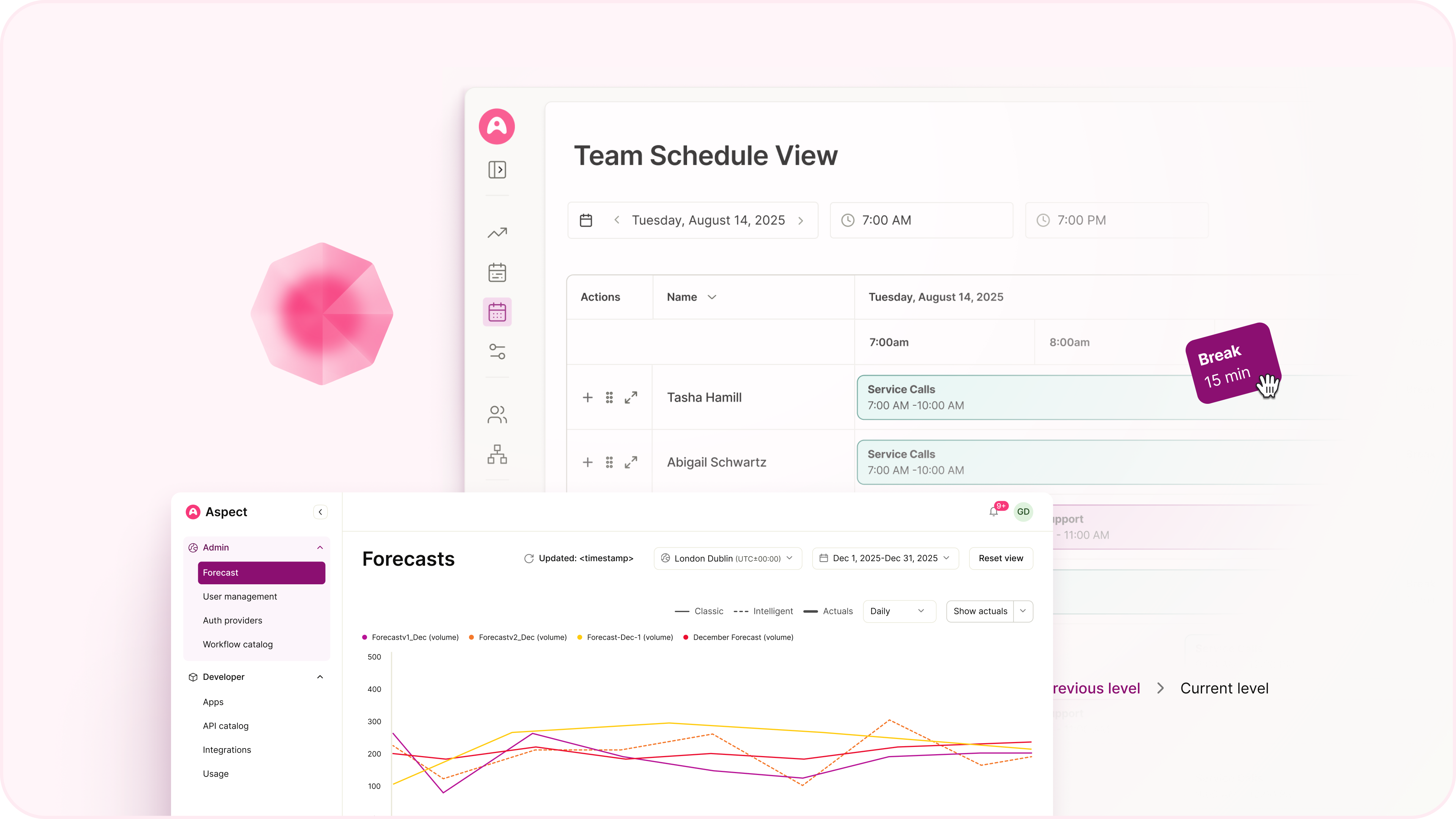
The centers pulling ahead have stopped treating the schedule as something you finish on Thursday and started treating it as a living thing they steer through the day. This is the thinking behind Aspect Intelligence: it watches the signals inside Aspect Workforce, flags risk to service before it lands, and recommends the next move within the limits you set, keeping planners and supervisors firmly in charge.
The direction of travel is clear. As volatility becomes the norm rather than the exception, the gap between centers that steer in real time and centers that defend a weekly plan will only widen. If your planning still ends on Thursday, the market has already moved past you.
- What is an always-on contact center?

- How is real-time workforce management different from traditional WFM?
- Does real-time scheduling make schedules unstable for agents?
- What metrics improve with an always-on approach?
- Who should own intraday staffing decisions?