


The hybrid workforce stopped being a prediction sometime in the last year. Most contact centers now run some mix of human agents and AI agents on the same queues, and the question has shifted from whether to use AI to how to coordinate people and software that are both, in effect, handling customers. That coordination is where service levels quietly break.
Here is the direct answer. A hybrid workforce works when every task has a clear owner, whether that owner is a person or an AI agent, and when there is a defined path for what happens when the AI hits something it cannot handle. Most failures I see come from handoff and ownership gaps, and from exceptions that fall into a space nobody planned for, rather than from the model itself.
The teams that get this right treat human plus AI work as an orchestration problem and design for the messy middle, the moments where an interaction moves between software and people. The teams that struggle treat AI as a chatbot they bolted onto the front door and hoped for the best. This playbook is about the first approach.
What is a hybrid workforce in a contact center, really?
A hybrid workforce is an operation where AI agents and human agents both carry real workload on the same queues, with work moving between them during a single customer journey. This is more than a deflection bot sitting in front of a human team. The AI handles some interactions end to end and hands off the ones it cannot resolve, while people supervise the automation, own the exceptions it creates, and take the interactions that need human judgment.
The reason this matters for planning is that your capacity is now split across two very different kinds of worker. One scales instantly and works at a flat quality until it hits an edge case, then fails in ways that are hard to predict. The other scales slowly, needs schedules and breaks, and brings judgment the AI does not have. Planning a workforce that includes both means you can no longer think in pure headcount. You are planning coverage across people and software together, and the interfaces between them are where the risk lives.
Gartner's read on where this lands is worth holding onto. The firm predicts that by 2028 none of the Fortune 500 will have fully eliminated human customer service. The endpoint is a genuinely blended operation that stays blended, which means the coordination problem is permanent and worth building around rather than treating as a temporary phase you can automate your way out of.
Who owns the outcome when a human and an AI both touch the same interaction?
Someone has to own the outcome, and in a hybrid model that owner has to be defined before the interaction starts rather than sorted out afterward. The most common failure is a customer who moves from an AI agent to a human and back, with neither the software nor any person actually accountable for resolving the underlying issue. Everyone did their part of the script. Nobody owned the result.
The fix is to assign ownership at the level of the customer outcome, not the individual touch. When an AI agent handles an interaction end to end, it owns that outcome and you measure it on resolution and recontact, the same way you would measure a person. When the AI escalates, ownership transfers cleanly to a named human queue with the full context attached, so the customer does not start over. When a human supervises an AI-handled batch, that supervisor owns the exceptions. The principle is that ownership is always locatable. At any moment you can answer who is responsible for this customer getting a resolution.
This is a coordination cost in its purest form. When ownership is fuzzy, the hidden tax shows up as repeat contacts, longer resolution times, and customers escalating to complaints because they could not find anyone accountable. Making ownership explicit is unglamorous work, and it removes more waste than most AI features do.
What breaks first when you add AI agents to WFM?
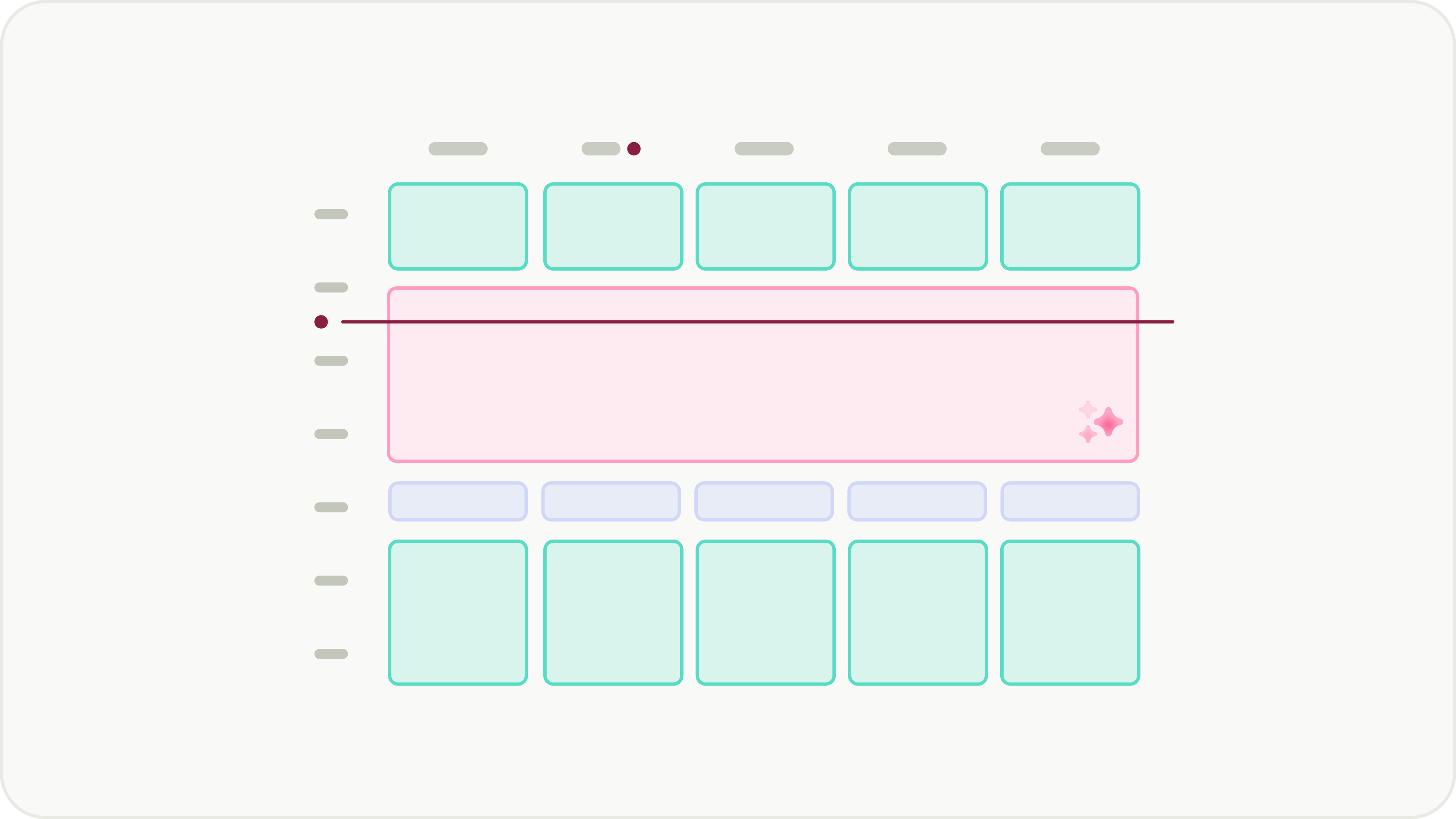
The first thing that breaks is your exception handling, because AI agents create a new category of work that your schedules and routing were never designed to absorb. When an AI agent fails, it does not fail like a person who asks a colleague for help. It fails by escalating a cluster of similar interactions all at once, often when some upstream condition changes, and that spike lands on a human team that was staffed for a normal day.
So the practical risk is not that the AI is wrong occasionally. It is that the AI is wrong in correlated bursts, and correlated bursts are exactly what destroy service levels. If a policy changes and the AI starts mishandling a common intent, you can get hundreds of escalations in an hour into a queue staffed for a handful. Your forecast never saw it coming because the forecast treated the AI as reliable capacity.
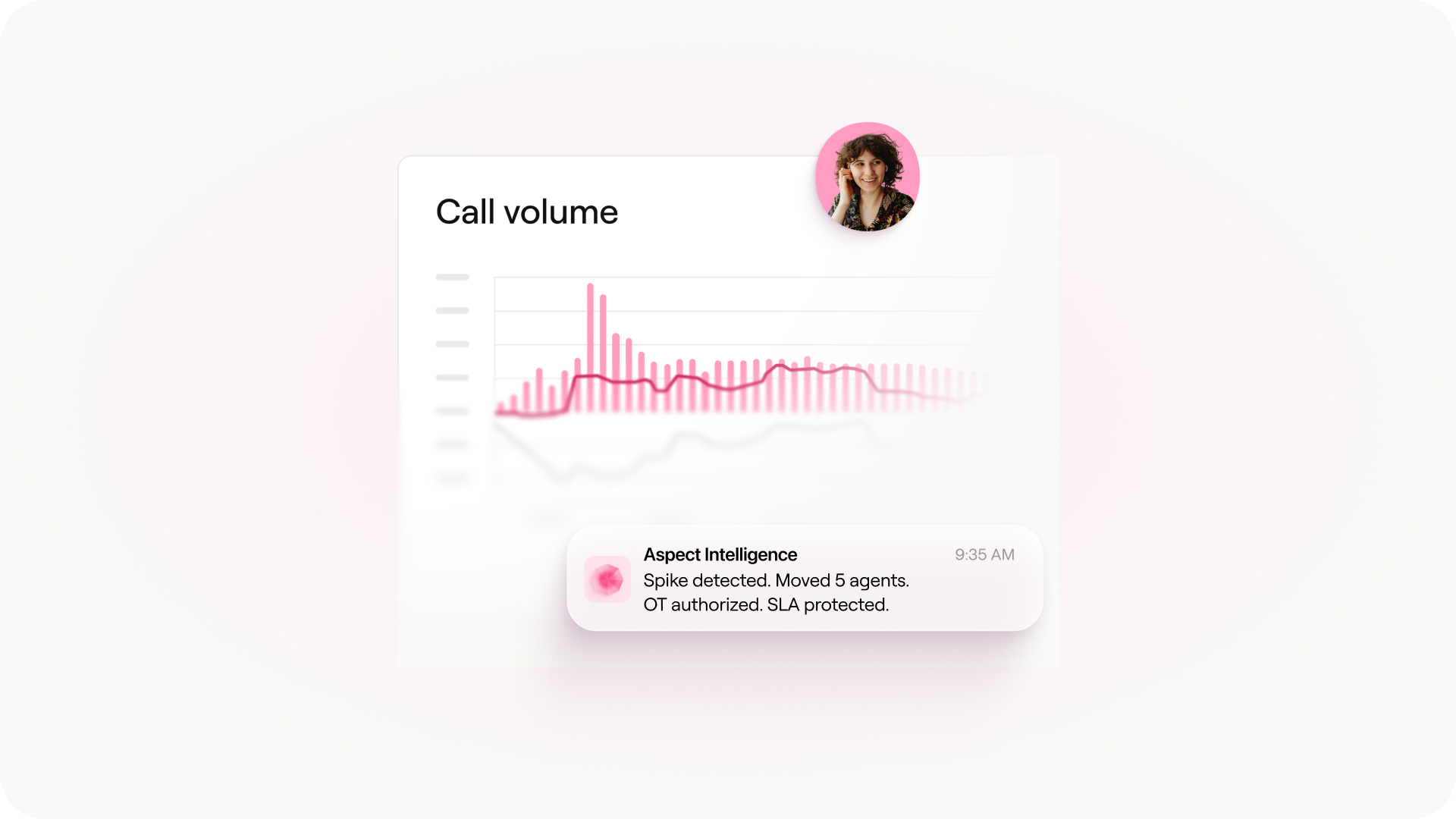
Real-time adaptability is the answer here, and it is the second positioning theme this topic sits on. You need to see the escalation stream from AI in real time and re-deploy people against it before the queue backs up. This is where the ability to re-forecast and reschedule intraday matters, because the hybrid model generates surprises that a morning schedule cannot anticipate. Deloitte's 2026 State of AI in the Enterprise research found that only about one in five companies has a mature model for governing autonomous AI agents, which tells you most operations are running this new, bursty capacity without the oversight to catch it when it turns. Closing that gap is less about trusting the AI more and more about watching it well.
How do you keep governance from slowing the floor down?
Good governance speeds the floor up by making it safe to automate more, as long as the controls run inside the workflow instead of sitting in a separate review meeting. The fear is that governance means a committee signs off on every AI decision and nothing moves. That version does slow you down and it does not scale. The version that works puts the rules into the system itself, so the AI operates within defined boundaries and only surfaces the decisions that genuinely need a person.
At Aspect we talk about this as policy-aware automation and guided intelligence, which means the automation knows the operating rules, acts within them, and keeps a human able to see and shape what it does. In a hybrid contact center that looks like an AI agent that can resolve within its approved scope, that escalates anything outside that scope with full context, that logs every action for audit, and that a supervisor can pause the moment its behavior looks wrong. The human sets the boundaries, watches the exceptions, and steps in when something looks off, rather than approving every individual step.
The distinction that keeps this practical is between low-risk actions the AI can take on its own and higher-risk actions that need a person in the loop. Answering a known question, sending a status update, drafting a reply for a human to approve, or looking up an order are all fine to automate outright. Changing a customer's plan, issuing a large refund, moving a published schedule, or overriding a policy exception are decisions where a human should see the recommendation and make the call. Draw that line clearly and governance becomes the thing that lets you automate confidently rather than the thing that holds you back.

What should you measure to know the hybrid model is working?
Measure the health of the interfaces between people and AI, because that is where a hybrid model succeeds or fails. Resolution rate and recontact tell you whether AI-handled work actually stuck. Escalation rate, and the time it takes a customer to get from AI to the right human, tells you whether your handoffs work. Exception volume tells you how often the AI hits its limits, and the trend in that number tells you whether your automation is improving or quietly degrading as the world changes around it.
Watch the human side too. If agent occupancy and after-contact work climb while total volume looks flat, the AI is probably handing your people a harder mix and you need to re-plan for it. If attrition rises in the teams that mostly handle AI escalations, that is a signal the work has become relentless, all hard contacts with no easy ones in between. A hybrid workforce that burns out its humans is not working, no matter how good the containment numbers look.
Two questions keep leadership honest here. Can you see, right now, who owns every category of work on your floor. And when the AI fails, do you find out from your monitoring or from your customers. If the answer to the second one is customers, you have a real-time visibility gap to close before you automate anything else.
The hybrid workforce is a design problem more than a technology problem. Get ownership, handoffs, exception handling, and real-time visibility right, and the AI becomes reliable capacity you can plan around. Skip that work, and you get a faster front door attached to an operation that falls over the first time something upstream changes.
- What is a hybrid workforce in a contact center?

- Who is accountable when AI and humans both handle a customer?
- Will AI fully replace human contact center agents?
- How do you govern AI agents without slowing operations down?
- What metrics show a hybrid workforce is working?