

The research on gamification shows it reliably changes how agents feel about their work, and its effect on performance depends on how the game is built. When employees see a workplace game as fair, they feel more positive about their jobs and their company. When they do not buy into it, they feel worse, and their performance can slip. The evidence that gamification raises performance on its own is weaker than its reputation suggests, which is the most useful thing a contact center leader can know before launching a leaderboard.
That is good news for anyone designing a game, because the conditions the research points to are mostly within a supervisor's control. The design choices that separate games agents embrace from games they quietly resent come down largely to fairness and focus. A contact center that gets those choices right can use games to build energy around the behaviors that matter most to customers, and pair them with the coaching that turns energy into better work.
What does the research say about gamification at work?
Research on gamification at work finds that its effects depend heavily on whether employees buy into the game. The clearest evidence comes from Ethan Mollick and Nancy Rothbard at the Wharton School, who studied several hundred salespeople at a fast-growing e-commerce company as it introduced a basketball-themed sales game with leaderboards and large screens tracking activity. They measured how much each employee accepted the game, using survey items that included whether the game was fair.
The split in outcomes was striking. Employees who accepted the game showed clear gains in positive feelings at work and in their attitude toward the company. Employees who did not accept it reported more negative feelings about their jobs and showed a slight drop in performance. The researchers could not find a corresponding sales increase among the employees who embraced the game, which is a useful reminder that a more positive floor and a more productive floor are related but separate outcomes.
The paper's title, "Mandatory Fun," sums up the risk well. A game people have not bought into can feel like one more obligation at work. The setting was a sales team, and contact centers share its most important features, including measurable individual activity and highly visible metrics, which makes the findings directly relevant even though the study took place outside a contact center.
Why can ranking agents make performance worse?
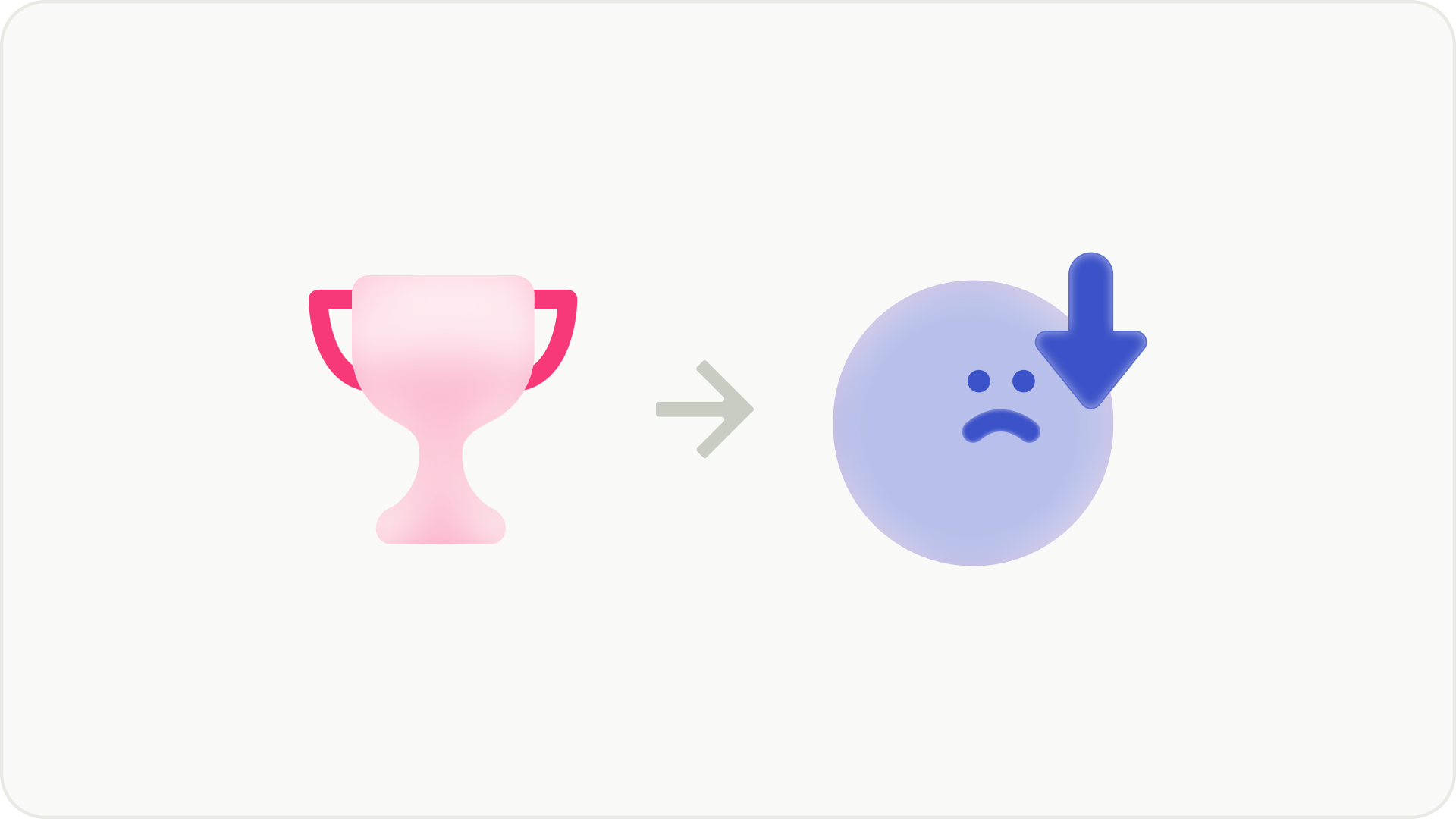
Ranking can make performance worse because rank feedback can discourage people who learn they are doing worse than they thought. Iwan Barankay, also at Wharton, ran a three-year randomized field experiment with full-time furniture salespeople who had been shown their own sales rank privately. When the company stopped showing it, sales rose by about 11 percent, an effect driven by male salespeople and by people learning they ranked lower than they expected.
A separate experiment by Barankay with online workers found a related pattern. Workers who were shown their rank were less likely to come back for more work, 42 percent compared with 66 percent of those who were not ranked, and the ranked workers who did return were 22 percent less productive. Barankay concluded that, in aggregate, feedback about rank was detrimental to performance.
Leaderboards still have a place, and they deserve the same care. These studies tested rank feedback shown to individuals, and a leaderboard displayed to the whole floor adds public comparison on top of it. Many contact centers will get better results from formats that celebrate progress and team achievement, where every agent has a realistic path to recognition.
Which contact center metrics work best for gamification?
The metrics that work best for gamification are the ones agents directly control and that line up with good outcomes for customers. Adherence to schedule, quality evaluation scores, completion of training modules, and first-contact resolution are all behaviors an agent can influence through their own effort. Metrics driven mostly by routing or by the mix of contacts an agent happens to receive feel arbitrary as the basis for a competition, and arbitrary scoring erodes the sense of fairness the research ties to agents feeling better about their work.
Speed metrics need special care. A game built only around average handle time rewards agents for ending conversations quickly, and some will do so at the expense of resolving the customer's issue. Goodhart's law, as it is commonly phrased, describes the problem: when a measure becomes a target, it ceases to be a good measure. The usual fix is to pair metrics, so that a speed goal always travels with a quality or resolution goal, and agents win by doing the whole job well.
Tenure matters too. A new agent competing on quality scores against colleagues with five years of experience is in a contest they have little realistic chance of winning, and the ranking research found that learning you rank lower than you expected is what drives the drop in effort. Grouping competitions by tenure band, or scoring improvement against each agent's own baseline, keeps the contest open to everyone.

How do you design a contact center game agents will buy into?
You design a game agents will buy into by involving them in its design and keeping the rules transparent, so the game feels like something they chose. Agents who help pick the metrics and the prizes have a direct hand in making the game fair, and fairness is the condition the research links to agents feeling better about their work. Publishing exactly how points are earned, and letting agents see their own progress in real time, removes the suspicion that the scoring favors anyone.
Format choices matter as much as metrics. Team competitions spread recognition more widely than individual rankings and give stronger performers a reason to help newer colleagues. Personal-best challenges, where each agent competes against their own previous results, give every agent a realistic chance to win regardless of tenure. Rotating games every few weeks keeps them fresh and gives agents who struggled with one format a new opportunity in the next.
Measure each game the way you would measure any other operational change. Before launch, record a baseline for the target metric and for a counterweight metric the game could harm, such as resolution rate when the game targets handle time. After a few weeks, compare both and ask agents whether the game feels fair. Whether employees saw a game as fair was part of what separated those who felt better about work from those who felt worse, so it is worth asking directly and acting on what agents say.
Recognition works best when it is connected to the same measures agents are coached on. Aspect League builds games and recognition on the performance data agents already see in Aspect Performance, so the metrics in a game match the KPIs and scorecards in their coaching conversations. That alignment means a game reinforces the same goals supervisors are coaching toward, and agents get one consistent picture of what good looks like across their scorecard and their games.
What this means for your performance strategy
Gamification is a tool for shaping how agents feel about their work, and it can lift engagement meaningfully when it is designed with care. The research is consistent on the central point: agents need to see the game as fair. Rank feedback carries real costs, and progress-based and team formats spread recognition more widely. Competing on behaviors agents control is the practical way to make a game feel fair.
The contact centers that get the most from gamification treat it as part of their performance system, connected to coaching and measured against outcomes customers feel. Designed that way, a game becomes one more way to help agents see their progress and enjoy getting better at a demanding job.
- Does gamification work in call centers?

- Why can ranking agents hurt contact center performance?
- Which contact center metrics are best to gamify?
- How do you get agents to buy into gamification?
- Should contact center games be team-based or individual?