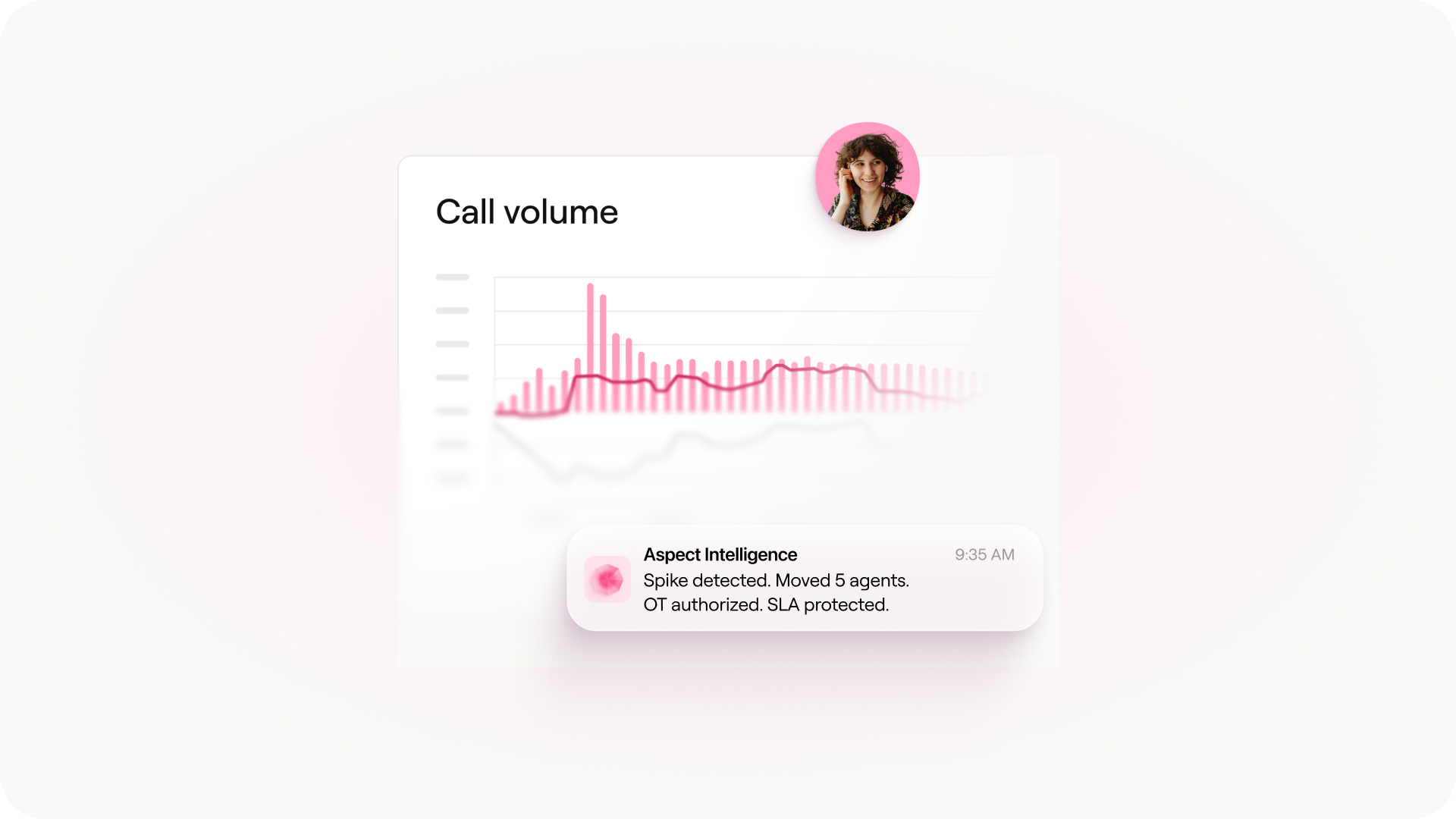
Yes, you can give agents real control over their schedules without losing control of service levels, as long as that control runs inside rules the system enforces automatically. The fear that stops most operations is understandable. Hand agents the ability to swap shifts, move breaks, and change start times, and it sounds like you are inviting coverage chaos. In practice the opposite is true, because a well-designed self-service system only ever lets an agent make a change that still protects the forecast. The agent gets freedom, and the operation keeps its coverage, because the guardrails do the work of saying no when a change would break something.
This matters more every year because scheduling flexibility has stopped being a nice-to-have. Agents now treat predictable, flexible scheduling as a baseline expectation when they choose and keep a job, and inflexible scheduling has quietly become one of the main reasons they leave. The operations still running rigid, manager-controlled schedules are paying for it in attrition, whether or not they connect the two.
Why does scheduling flexibility matter so much for retention?
Scheduling flexibility matters because agents rank it among the most important factors in choosing and staying in a job, and rigid scheduling has become a leading driver of the attrition that costs contact centers most. When the schedule does not bend around the rest of an agent's life, the school pickup, the appointment, the occasional bad week, people leave for an employer whose schedule does. That is not a soft preference. It shows up directly in turnover numbers.
The financial weight of this is easy to underestimate. Independent research from Insignia Resources puts contact center turnover at 40 to 45 percent annually, with each replacement costing $10,000 to $20,000 once recruiting, training, and ramp time are counted. For a 100-agent operation, that is well over half a million dollars a year in churn. Flexibility is one of the few retention levers that costs little to pull and pays back quickly, because a schedule an agent can actually live inside is a schedule they are more willing to keep.
What can agents safely be allowed to change themselves?
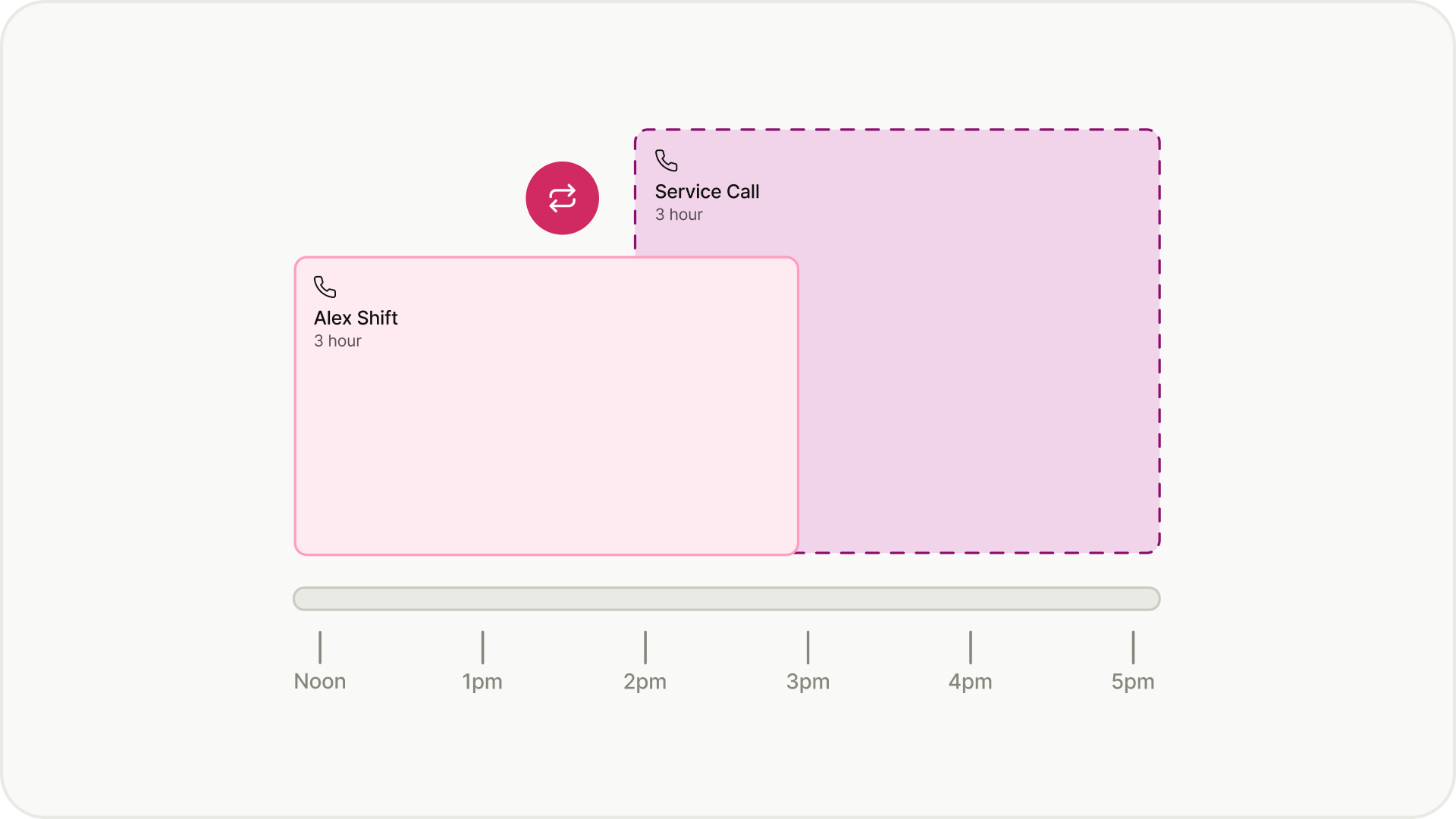
Agents can safely change anything that stays inside your staffing rules, which typically includes shift swaps, moving a break or lunch, requesting time off, bidding on preferred shifts, and requesting coaching or meetings. The unlock is that each of these runs through validation before it is granted. The system checks the change against coverage, skill requirements, and labor rules in real time, and approves it only if the forecast still holds after the change.
That validation is what separates safe self-service from a free-for-all. When an agent asks to swap a shift, the system does not just record the request, it confirms that the swap leaves the right number of skilled people in every affected interval. When an agent moves a break, it confirms the queue can absorb the move. Changes that pass run automatically, giving the agent the fast answer they want, and changes that would break coverage are declined or routed for approval. The agent never has to understand the staffing math. The rules quietly enforce it on their behalf.
How do you keep self-service from breaking your coverage?
You keep coverage intact by encoding your staffing constraints as rules the system checks before any self-service change takes effect, so an agent can only ever act within limits that protect service. The constraints that matter are the ones a good planner would never break: minimum coverage per interval, required skills for a queue, maximum overtime, minimum rest between shifts, and any labor or union rules that apply. Once those are encoded, self-service becomes safe by construction, because the system cannot grant a change that violates them.
This is the practical meaning of guardrails. Set the limits once, while everyone is calm, and let the system apply them consistently every time an agent makes a request. The alternative, having a supervisor manually assess every swap and break move, recreates exactly the bottleneck self-service was meant to remove, and it introduces the inconsistency of one manager approving what another would decline. Rules applied automatically are faster for the agent and fairer across the floor, and they never get tired or make an exception under pressure that blows a service level an hour later.
Where does self-service scheduling free up your planners and supervisors?
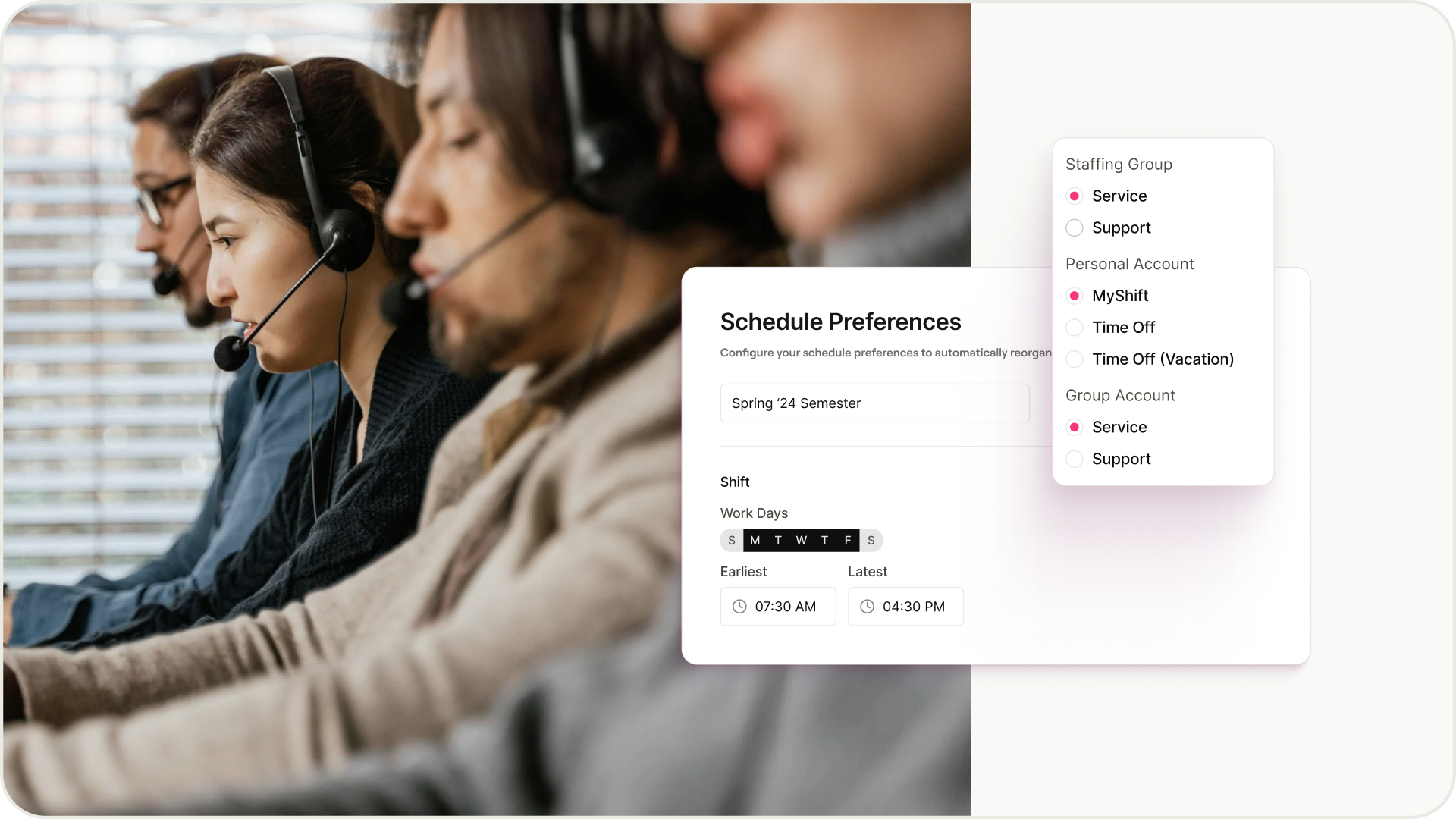
Self-service frees planners and supervisors from the constant low-value work of processing routine schedule requests, so they can spend their time on the exceptions and decisions that actually need judgment. Every swap a supervisor no longer has to adjudicate, every break move they no longer have to approve, is time returned to the work only a person can do: coaching, handling genuine exceptions, and managing the intraday moves that keep service on track.
This is where Aspect thinks about workforce experience and guided intelligence together. Aspect gives agents a self-service interface to manage their own schedules within the guardrails a planner controls, which improves the agent's day and reclaims the supervisor's time at the same time. The system handles the routine validation, and the human stays in charge of the limits and the exceptions. The result is an operation where agents feel they have a voice in their schedule and planners stop spending their day as a schedule-change approval desk.
What this means for your workforce strategy
Self-service scheduling is not a trade-off between agent freedom and operational control. Done with real guardrails, it delivers both, because the rules that protect coverage are exactly what make it safe to hand agents more control. The operations that get this right reduce attrition, reclaim supervisor time, and keep service levels steady, all from the same investment.
As flexibility becomes the expectation agents hire and quit over, the operations that can offer it safely will hold on to people the rigid ones lose. The question is no longer whether to give agents control. It is whether your guardrails are good enough to make that control safe.
- Does self-service scheduling hurt service levels?

- What schedule changes can agents make themselves?
- How does flexible scheduling affect retention?
- How do you stop agents from breaking coverage with swaps?
- Does self-service reduce work for supervisors?