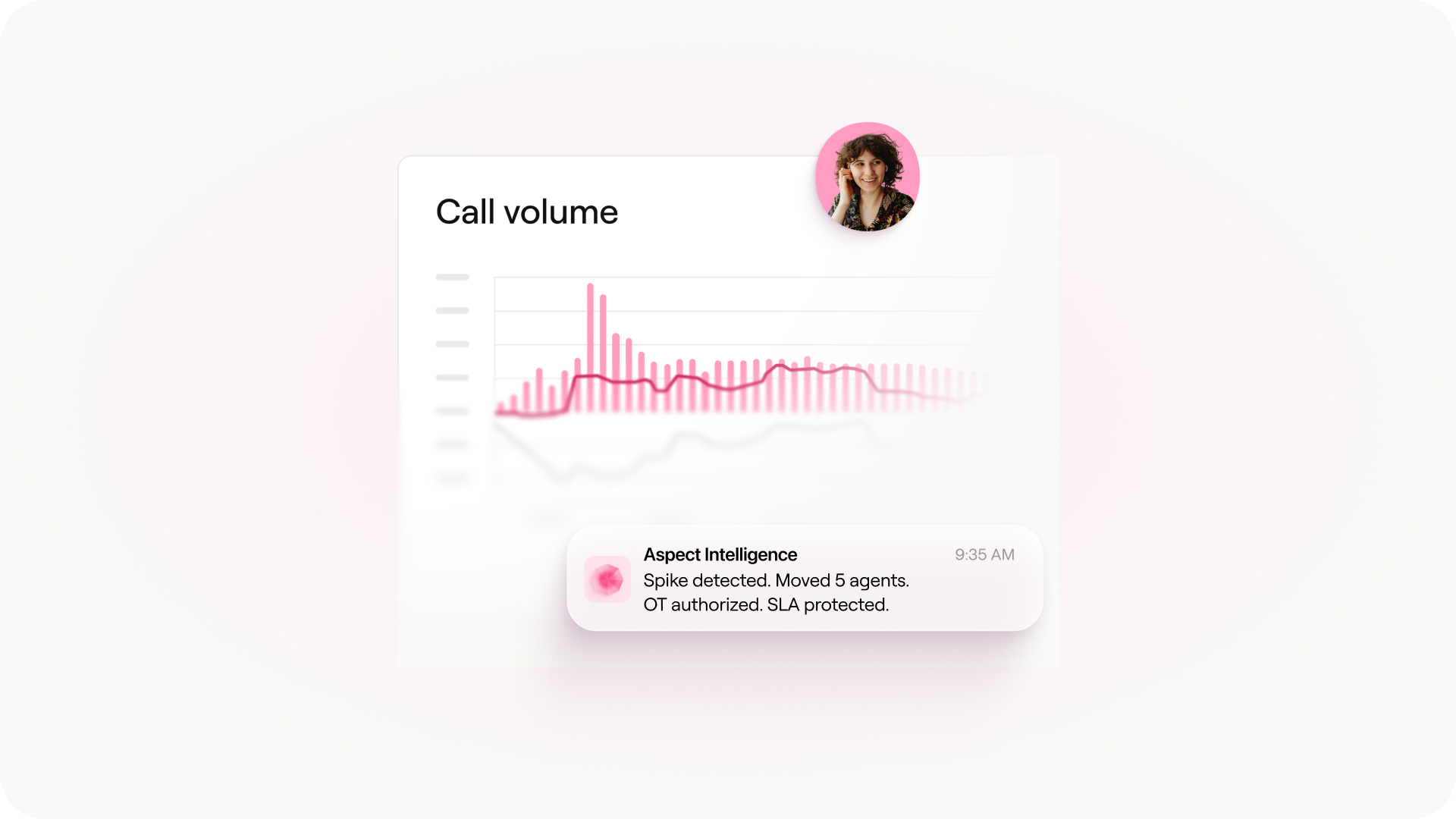
Contact centers invest heavily in workforce planning: they build forecasts, optimize schedules, define staffing targets, and document coverage plans.
Yet once the day begins, real-world variability takes over. Call volume spikes. Agents call out. Handle times fluctuate. Even the most accurate forecast can quickly drift off course.
Intraday management bridges the gap between planning and live operations. It focuses on monitoring performance in real time and making data-driven adjustments to protect service levels, control costs, and maintain workforce balance.
This guide explores what intraday management is, why it matters in modern contact centers, and how the right processes and technology enable leaders to stay in control throughout the day.
What is intraday management?
Intraday management is the process of monitoring and adjusting staffing in a contact center in real time as conditions change throughout the day.
While forecasting and scheduling focus on predicting demand and assigning shifts in advance, intraday management addresses what happens after the day begins. It tracks live call volumes, queue performance, agent availability, schedule adherence, and service levels, then enables managers to respond when reality doesn't match the plan.
In practice, intraday management includes actions such as:
- Reallocating agents between queues.
- Offering voluntary time off or overtime.
- Adjusting break schedules.
- Managing adherence in real time.
- Responding to unexpected spikes in volume or handle time.
The goal is to close the gap between forecasted demand and actual performance. Effective intraday management protects service levels, prevents overstaffing or understaffing, and helps control labor costs without relying on reactive or manual workarounds.
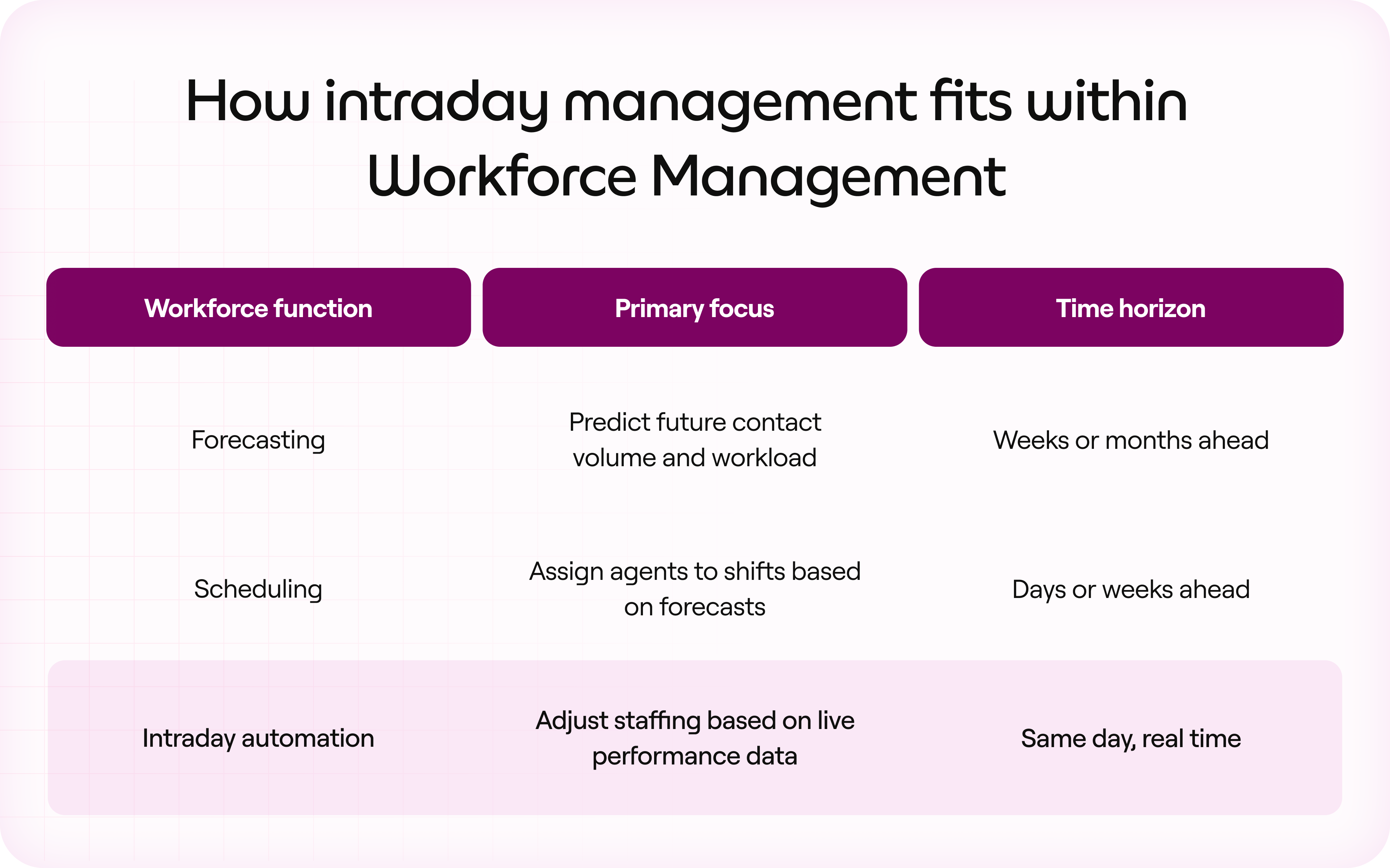
Here's how intraday management compares to other core workforce management functions:
Learn more: Workforce cost optimization: How contact centers reduce labor spend without hurting CX.
Why intraday management has become a critical contact center challenge
Contact centers today face far more volatility than they did just a few years ago.
Customer demand fluctuates across channels. Handle times shift based on issue complexity. Agents work remotely or in hybrid models. Unexpected absences, system slowdowns, and real-time changes can quickly disrupt even the most well-built schedules.
What looks fully staffed at 9 a.m. can become understaffed by noon. The real challenge is detecting gaps and responding before performance suffers.
Without strong intraday practices, small coverage gaps can escalate into larger operational problems:
- Sudden drops in service levels.
- Missed SLA targets and longer wait times.
- Increased overtime and higher labor costs.
- Agent fatigue and burnout from unplanned workloads.
- Constant reactive firefighting by supervisors.
- Lower productivity and team morale.
Common intraday management mistakes
Even well-established contact centers can struggle if their intraday management approach is flawed. Many mistakes come from focusing on the wrong signals, reacting too late, or relying on disconnected data.
Common intraday management mistakes include:
Relying on static dashboards
When managers use dashboards that only show past data, they risk making decisions based on outdated information. This delays responses to changing call volumes or workload shifts. Actions based on static views may not match what's happening on the floor, leaving some queues understaffed while others have excess coverage.
Overreacting to short-term spikes
Sudden demand changes can feel urgent, but moving agents too quickly without considering downstream effects often creates bigger problems. Overreacting to a temporary call surge can leave other channels under-resourced or disrupt planned breaks, destabilizing the overall operation.
Making manual schedule changes without impact analysis
Adjusting schedules on the fly may seem like a quick fix, but without evaluating how those changes affect the rest of the team, coverage gaps and inefficiencies emerge. Overstaffing one area while understaffing another leads to unnecessary labor costs and uneven service levels.
Treating real-time adherence only as a compliance metric
Some organizations use adherence only to track whether agents stick to schedules, rather than to guide decisions. Effective intraday management uses adherence as a signal to identify where help is needed, redistribute work, and maintain service performance.
Ignoring context and prioritization
Acting on single metrics without understanding the broader situation can backfire. For example, moving agents based solely on queue length may pull skilled agents from complex cases that need focused support. Without context, decisions can improve one area at the expense of others.
Failing to use structured decision-making tools
When teams rely on intuition or reactive judgment instead of systems that simulate potential outcomes, adjustments become inconsistent. Without structured guidance, managers face increased stress, and teams may experience unnecessary overtime or burnout.
How real-time data improves intraday decisions
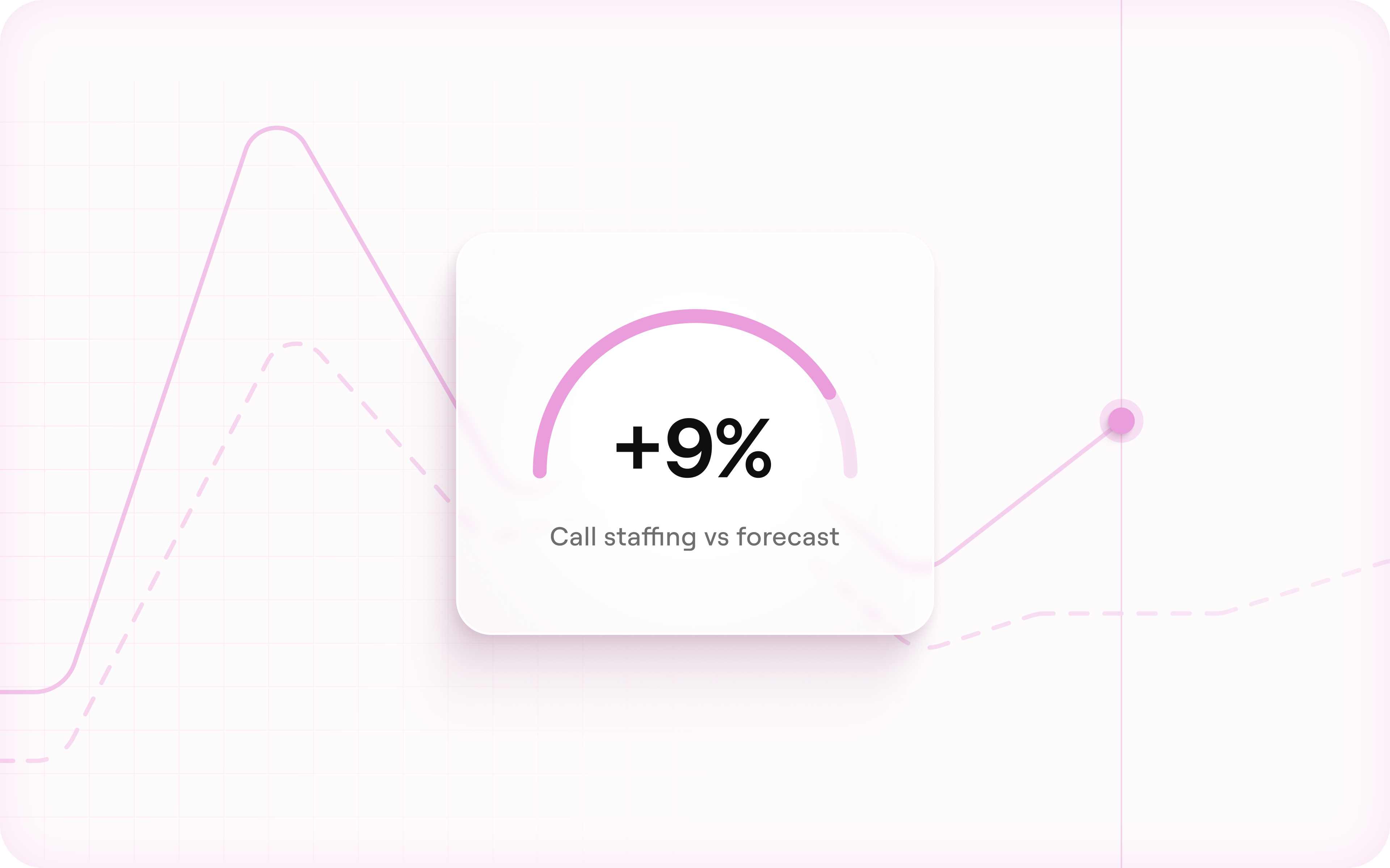
Intraday management is often described as "monitoring what's happening right now." But strong operations go beyond watching dashboards.
Real-time data transforms how leaders make decisions by helping them understand what is happening, why it's happening, and what each possible action means for service levels, labor costs, and the agent experience.
When teams focus only on basic metrics, they treat symptoms rather than causes. They might move agents when a queue lengthens or approve overtime once wait times climb. These steps may solve the immediate issue, but they often create new problems later in the day.
With deeper real-time analytics, leaders see what's driving the change before they act. This understanding lets them address root causes rather than apply temporary fixes.
Real-time data also helps managers balance service quality against costs more deliberately. With accurate, current information, they make intentional trade-offs instead of guessing, resulting in more consistent performance.
Over time, real-time data builds better decision-making habits. When managers see the impact of their actions within the same shift, they develop sharper judgment and spend less time firefighting.
Intraday workforce management vs. real-time adherence: What's the difference?
Intraday workforce management and real-time adherence are closely linked but serve different purposes in daily contact center operations.
Real-time adherence shows whether agents are following their schedules at any given moment. It shows who is available, on break, off task, or out of compliance. This visibility is important for understanding current staffing behavior.
However, adherence only answers one question: Are agents doing what the schedule says right now? It doesn't indicate whether the operation is optimized for what's coming next.
Intraday management takes a broader view of the day. It considers adherence alongside live demand, queue performance, forecast variance, and remaining schedule flexibility.
For example, an agent may be slightly out of adherence, but reassigning them could weaken coverage later when volume is projected to increase. Intraday management weighs those trade-offs before taking action.
This is where many contact centers struggle. When adherence becomes the outcome, managers feel pressure to correct every deviation as it appears. That approach can lead to frequent changes that raise costs or push coverage gaps to later in the day.
Intraday management prioritizes the overall health of the operation. Each action is evaluated based on how it affects service performance, labor efficiency, and workforce balance.
Workforce success: See how a growing automotive company used Aspect Workforce™ to drive efficiency with real-time adherence monitoring. Read case study.
From reactive fixes to intelligence-led intraday management
Many contact centers manage intraday operations in a reactive mode. A queue spikes, service levels dip, or adherence slips, then supervisors respond in the moment.
While reactive management focuses on symptoms, intelligence-led intraday management focuses on trajectory.
Instead of focusing only on what's happening right now, modern intraday management uses real-time intelligence to anticipate what is likely to happen next. It combines live performance data with forecast updates, historical patterns, adherence insights, and scenario modeling to guide more balanced decisions.
When intraday decisions are informed by connected intelligence, teams move from firefighting to proactive control. They can prevent service risks before they escalate, avoid solving one problem by creating another, and maintain greater stability for customers and agents.
Platforms like Aspect Workforce support this shift by providing clear, real-time guidance on what to adjust and when. By unifying forecasting updates, adherence data, performance metrics, and predictive signals, leaders gain actionable insights, not just dashboards.
How Aspect Intelligence™ supports intelligence-led intraday management in WFM
Aspect Intelligence transforms intraday management from reactive firefighting into guided, prevention-first decision-making. It continuously evaluates adherence and intraday conditions against staffing targets and operational constraints.
Instead of waiting for humans to interpret signals and coordinate responses, Aspect Intelligence identifies risk early and guides timely, policy-aware action while there's still time to prevent disruption.
Real-time intelligence that closes the gap between signal and action
Aspect Intelligence connects forecasting updates, live operational signals, and scheduling flexibility in a unified view. This integration eliminates the delays that come from monitoring disconnected systems and enables faster, more confident decision-making throughout the day.
Automatic Schedule Update
When adherence issues arise or staffing gaps emerge, Automatic Schedule Updates applies approved corrections in real time, within the boundaries of labor rules, union agreements, and operational policies. Every action is transparent, auditable, and aligned with the constraints you define.
Intelligence designed for real-world operations
Aspect Intelligence is built to perform when conditions don't go as planned. Absences, volume spikes, system slowdowns, and unexpected events are normal in contact center operations. The platform continuously adapts to these realities, helping teams respond quickly without starting over or forcing disruptive last-minute fixes.
Human-centered automation with full transparency
Aspect Intelligence doesn't replace human judgment, it enhances it. Every automated action respects defined rules and approval workflows. And every change is logged with a complete audit trail so teams can see what happened, why it happened, and what constraints were applied.
Intelligence embedded at the core, not layered on top
Unlike platforms that add AI as a separate feature or dashboard, Aspect Intelligence is embedded directly into workforce operations. It connects plans and real-time conditions to policy-aware automation and intraday execution, continuously guiding the operation instead of waiting for humans to interpret signals and act manually.
See how Aspect Intelligence transforms contact center operations with real-time guidance, automated adjustments, and proactive decision-making. Learn more about Aspect Intelligence.
- What is intraday management in a contact center?

- Why is intraday management critical for maintaining service levels?
- How does intraday management differ from real-time adherence?
- How does intraday management help reduce labor costs?
- What tools support effective intraday management in contact centers?