

High agent occupancy feels like efficiency, and that instinct is exactly what makes it dangerous. Occupancy measures the share of an agent's logged-in time spent actively handling contacts, and the intuition that a higher number means a harder-working, better-run floor is one of the most expensive misreadings in workforce management. Past a certain point, rising occupancy does not signal a productive operation. It signals a floor running without recovery time, and it predicts the burnout and attrition that quietly wreck your cost base.
The trap is that occupancy is easy to push up and feels virtuous when you do. Trim a little headcount, tighten the schedule, and the number climbs toward 90 percent. On a dashboard that looks like a win. On the floor it means agents are moving from one contact straight into the next with no gap to breathe, reset, or recover, hour after hour. The cost of that does not show up in the occupancy metric. It shows up two quarters later in attrition, quality decline, and a cost per contact that has quietly risen even though the floor looks busier than ever.
What is a healthy occupancy rate for a contact center?
A healthy occupancy rate sits in roughly the 75 to 85 percent range, and sustained readings above about 85 to 90 percent are a reliable burnout warning rather than a sign of excellence. The exact healthy band varies a little by source and channel, but the consensus across independent benchmarks lands in that zone, with the shared conclusion that pushing much past it consistently does more harm than good.
The reason there is a ceiling at all is that the gaps between contacts are not wasted time. They are recovery, and they are also when the work that keeps a floor healthy actually happens: a moment to reset after a difficult interaction, time to absorb a coaching note, the mental space to handle the next complex contact well. When occupancy climbs past the healthy band, those gaps disappear first. Agents lose the recovery that sustains quality, and the floor starts trading long-term capability for short-term throughput. The number looks better and the operation gets worse.

Why does high occupancy increase costs instead of reducing them?
High occupancy increases costs because it drives the attrition that is one of the most expensive problems in the contact center, and replacing agents costs far more than the efficiency you gained by overloading them. The logic feels backward until you follow it through. Push occupancy up, and you handle the same volume with slightly fewer agents, which looks like a saving. But sustained high occupancy is a leading cause of burnout, burnout drives attrition, and attrition is brutally expensive.
The numbers make the trade obvious once you see them together. Independent research from Insignia Resources puts contact center turnover at 40 to 45 percent annually, with high-stress operations reaching 55 to 60 percent, and each departure costing $10,000 to $20,000 in direct replacement expense. The same research found 87 percent of agents reporting high workplace stress and 74 percent experiencing ongoing burnout. When you overload a floor to save a few positions and then replace a chunk of that floor every year at those costs, the math does not come out ahead. Cost per contact rises rather than falls, because turnover and the ramp time of constantly onboarding new agents outweigh the staffing you trimmed.
How do occupancy and shrinkage work against each other?
Occupancy and shrinkage pull in opposite directions, and squeezing one to look better usually makes the other worse in a way that damages the floor. Shrinkage is the paid time agents are not available to handle contacts, including the breaks, training, and coaching that keep them capable. Occupancy is how hard the available time is worked. Attack shrinkage by cutting the development and recovery activities, and you push occupancy up on the remaining time, which accelerates burnout. Chase low occupancy by overstaffing, and your cost per contact climbs the other way.
The point is that neither number is meant to be maximized. They are meant to be balanced, and read together they tell you whether a floor is staffed sanely or being quietly burned out. A center running 30 to 35 percent shrinkage and occupancy in the high 70s to low 80s is usually in a healthy place. A center that has driven shrinkage down and occupancy up to look lean on both is often heading for an attrition problem it has not seen yet. This is why the two metrics belong on the same page, not in separate reports owned by people optimizing them independently.
How does better forecasting protect occupancy without overstaffing?
Better forecasting protects occupancy by matching staffing to demand closely enough that you neither overload agents on busy intervals nor carry expensive idle time on quiet ones. The reason occupancy spikes into the danger zone is usually that the forecast underestimated demand for an interval, so the agents who are there absorb more than they should. The reason it craters into wasted cost is usually the opposite. Accurate interval-level forecasting keeps occupancy inside the healthy band by design, because the plan reflects the demand the floor actually faces.
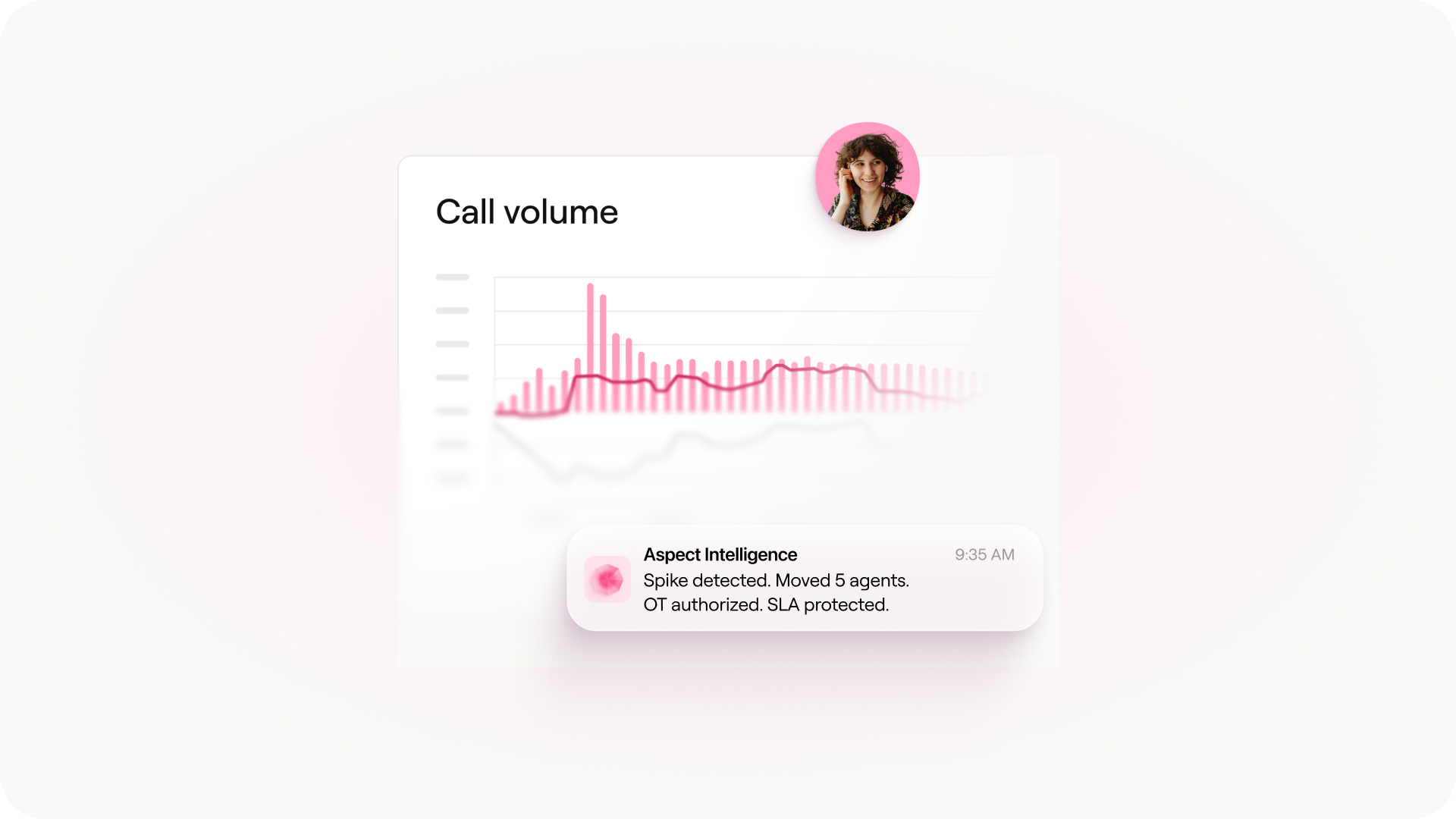
This is where Aspect thinks about occupancy as a forecasting and intelligence problem rather than a target to hit. Aspect Intelligence watches how the day is unfolding against plan and flags when an interval is drifting toward the overload that spikes occupancy, so a planner can act while there is still room to rebalance. The planner stays in control of the response, with the system doing the early detection that keeps the floor inside the healthy band rather than discovering the overload in a report after agents have already absorbed it. Occupancy managed this way stops being a number you chase and becomes a signal you keep in a healthy range.

What this means for your workforce strategy
Occupancy is one of the most misread metrics in the contact center, and the misreading is expensive. The instinct to push it higher treats a warning light as a scoreboard, and the cost arrives later as burnout, attrition, and a rising cost per contact that the busier-looking floor was supposed to prevent. The operations that get this right hold occupancy in the healthy band deliberately, read it alongside shrinkage rather than in isolation, and treat the gaps between contacts as the recovery and development time they actually are.
The floors that pull ahead are not the ones running agents hardest. They are the ones staffing accurately enough that agents work at a sustainable pace, stay longer, and handle the hard contacts well, which is what actually lowers cost per contact over time.
- What is a good occupancy rate for a call center?

- Why is high occupancy bad?
- How is occupancy different from utilization?
- How do occupancy and shrinkage relate?
- How can I lower occupancy without overstaffing?