


As we move into 2026, workforce management (WFM) and workforce engagement management (WEM) are transforming faster than ever. Technological innovation, shifting employee expectations, and business pressures are driving organizations to rethink how they manage, engage, and optimize their teams.
Here's a look at the top WFM trends shaping 2026 and the technology pushing contact center workforce strategies forward.
1. AI automation and predictive analytics
AI and machine learning are automating scheduling, payroll, and absence management, freeing managers to focus on strategic work. Predictive analytics helps organizations forecast staffing needs more accurately, optimize labor costs, and respond quickly to market changes. AI-driven insights enable faster, smarter decisions while breaking down operational silos and improving agility.
Learn more: Predictive analytics and AI in 2025: What worked, what changed, and what’s next in 2026.
2. AI-powered agent support
Virtual agents, voice analytics, and predictive sentiment analysis are becoming standard tools in contact centers.
These technologies deliver personalized, proactive support while enhancing agent performance and providing real-time insights for training and development. The result? Contact centers are shifting from cost centers to value centers, building customer trust and driving long-term loyalty.
3. Real-time analytics in the hands of supervisors
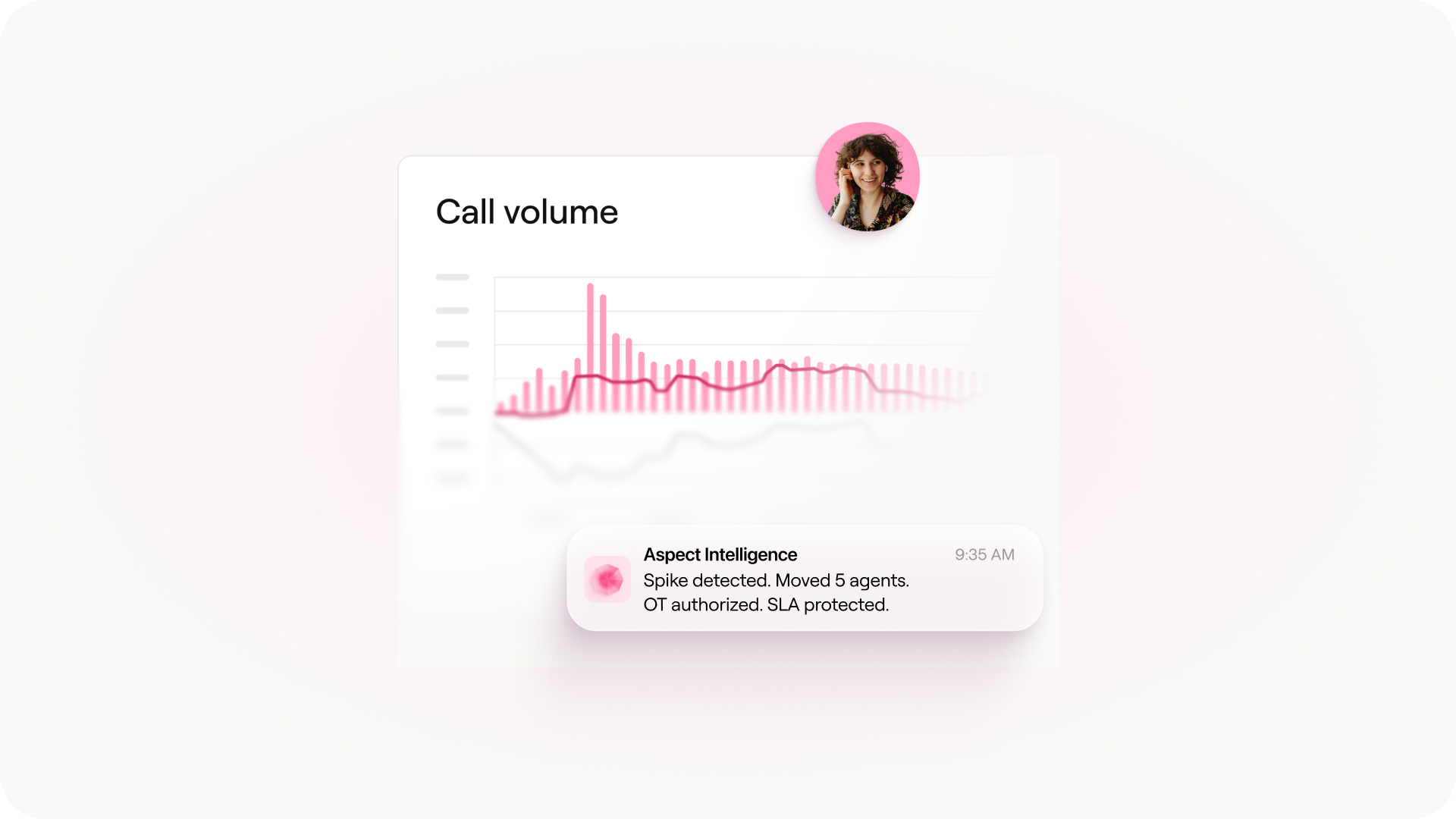
Dashboards now surface live adherence, productivity, and customer experience metrics so supervisors can intervene in the moment — coaching agents, re-routing contacts, or adjusting schedules in response to spikes or dips in volume. This shift from lagging to leading indicators supports more agile day-to-day management and better CX outcomes.
Learn more: Workforce data analytics: How to improve workforce decisions with data.
4. Cloud platforms and mobile-first solutions
Cloud-based WFM solutions continue to gain momentum, offering scalable, flexible, and secure platforms for remote and distributed workforces.
Cloud WFM integrates seamlessly with ERP, CRM, and payroll systems, creating a unified approach to workforce management. Real-time analytics and mobile optimization give managers and employees instant access to critical data, streamlined communication, and the ability to manage schedules and performance from anywhere.
5. Putting people first: Well-being, engagement, and DEI
Modern WFM platforms now include features supporting mental health, skills development, and overall well-being. These innovations boost engagement, productivity, and retention, helping organizations become employers of choice. Diversity, equity, and inclusion (DEI) initiatives are also being embedded into WFM software, enabling better tracking, measurement, and improvement of workplace equity.
Learn more: Why contact centers can't afford to ignore frontline agent experience.
6. Breaking down silos with unified data
WFM solutions are integrating with a wider range of business systems to enhance data flow across departments. This connectivity supports better decision-making and helps organizations respond more effectively to changing business needs.
7. Embracing hybrid and remote work
The mega call center model is giving way to distributed and hybrid approaches. Organizations are embracing remote operations to access broader talent pools, improve flexibility, and reduce costs. Cloud infrastructure and digital-first strategies enable seamless omnichannel support and self-service options.
WFM software is evolving to manage both on-site and remote employees effectively. Tools for flexible scheduling, performance tracking, and real-time communication are essential for supporting distributed teams while maintaining productivity and engagement.
Contact centers are also reimagining training and engagement programs, investing in digital learning, coaching, and well-being initiatives to support their distributed workforce.
8. Mobile workforce automation
Mobile workforce technology is transforming how organizations manage field and remote employees. Real-time data access, intelligent worker routing, instant communication, and remote device management are driving efficiency, faster response times, and improved customer satisfaction.
9. Building stronger talent pipelines
As AI automation reduces entry-level roles, HR teams face increasing pressure to redesign early career development programs and build robust talent pipelines. Organizations must focus on rapidly developing expertise and retaining top talent through targeted engagement and retention strategies.
10. Adapting to cost pressures
Economic uncertainty is forcing organizations to reevaluate their workforce strategies. The ability to adapt quickly to changing business conditions, optimize labor costs, and drive efficiency through technology will be key differentiators in 2026 and beyond.
How Aspect enables WFM trends for 2026
Aspect's WFM solutions bring advanced AI and machine learning to forecasting, scheduling, and real-time insights. Organizations can accurately predict staffing needs and optimize labor allocation in real time, supporting traditional and digital contact center environments as well as hybrid and remote workforce models.
The platform is cloud-enabled and mobile-first, giving employees and managers anytime, anywhere access to schedules, self-service shift swaps, time-off requests, and proactive notifications. This aligns with the flexible, employee-centric experiences today's workforce expects.
Aspect provides real-time dashboards and analytics for data-driven decisions and continuous improvement. Omnichannel support improves forecasting and scheduling across voice, email, chat, and social channels.
Plus, Aspect's compliance framework and integrations with leading CRM, HRIS, and payroll systems help organizations meet complex regulatory and operational requirements.
Ready to transform your workforce management in 2026? Explore Aspect WFM.