


Customers can now start handing some of their service interactions to their own AI assistants, which means contact centers are beginning to see a new kind of contact: one initiated by software acting on a person's behalf. In a Gartner survey of 4,879 customers conducted in January and February 2025, 51 percent said they would be willing to use a generative AI assistant to handle customer service interactions for them. In July 2025, Google began rolling out a Search feature to all US users that calls local businesses to check pricing and availability, placing automated calls on the user's behalf.
For workforce planning, this changes the inputs every forecast depends on. Demand models are calibrated on years of contacts that people started at times of their own choosing and with their own limits on patience. A contact initiated by an assistant arrives on different terms, and Gartner expects these assistants to let customers raise requests at a much higher rate because they bring the effort of making a request close to zero. Contact centers that start measuring this demand now will have the history they need to plan for it when it grows.
What is a personal AI agent in customer service?
A personal AI agent is software a customer authorizes to contact a company on their behalf and report back with the result, whether the job is gathering information or completing a task. It works for the customer and sits on the customer's side of the conversation. The assistant might be built into a phone or a search engine, and it can reach a company through whatever channel is available, including a voice line answered by a human agent.
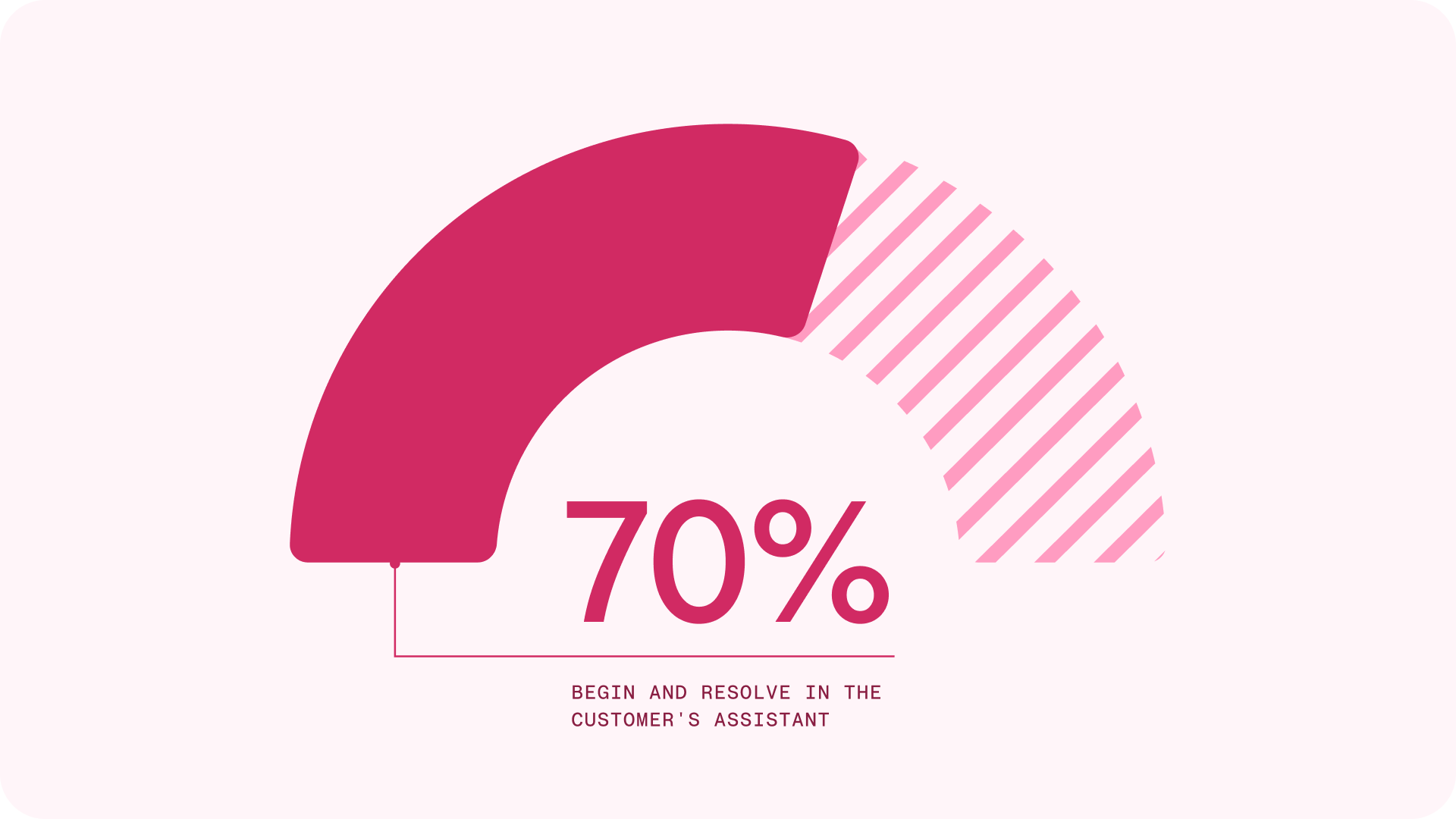
The scale Gartner expects is significant. Gartner predicts that by 2028, 70 percent of customer service journeys will begin and be resolved in conversational, third-party assistants built into mobile devices. That prediction describes journeys that start and finish inside the customer's assistant. By implication, the journeys that need something the assistant cannot supply, such as an exception or a decision only a person can make, travel onward to a company's contact center, and those are the journeys workforce plans have to absorb.
Why would personal AI agents increase contact volume?
Personal AI agents are likely to increase contact volume because they make contacting a company nearly effortless, and effort has always been one of the strongest natural limits on customer demand. Gartner's June 2025 outlook on customer service makes this point directly, noting that AI assistants could reduce the effort of raising a request to near zero and are likely to let customers raise requests far more often. A customer who would never wait on hold to question a small fee may happily ask an assistant to handle it, and an assistant asked to find the best price on a service can contact several providers in the time it takes a person to call one.
Gartner also flags the commercial consequence. Brad Fager, a senior director analyst at Gartner, has warned that widespread customer adoption of AI assistants creates a cost risk that could undermine the gains companies make through their own service automation. For planners, this means the volume forecast now has a driver that sits outside the company entirely. The pace at which consumers adopt AI tools becomes an input to staffing, and no internal marketing calendar or billing cycle predicts it.
The practical starting point is to treat machine-initiated contacts as their own workload stream with their own forecast. Their arrival patterns and handle times are likely to differ from contacts started by people, and blending the two into one historical series hides the trend inside the average until it is large enough to break the plan.
How do machine-initiated contacts change the work that reaches human agents?
Machine-initiated contacts split the work that reaches human agents into two distinct shapes. The first is short information-gathering calls placed by assistants, such as the pricing and availability checks Google's feature already makes. These are likely to be predictable in content and quick to answer, though they still consume an agent's time when they arrive on a voice line staffed by people.
The second shape is the escalation the assistant could not complete. When an assistant handles everything it can through digital channels, the contacts that reach a person are the exceptions and disputes that require judgment or authority. These conversations are likely to run longer and demand more skill. A queue that once held a mix of simple and complex work is likely to hold a higher concentration of hard contacts, which changes average handle time along with the skills mix you schedule against and the coaching your agents need.
There is a quieter effect as well. Gartner notes that when customers automate interactions through third-party AI, the quality and quantity of voice-of-customer data can decline. The contact reasons and sentiment agents capture during a call feed forecasting and planning. When the party on the line is an assistant summarizing a customer's request, some of that signal thins out, and planners lose part of the early warning system that tells them demand is shifting.

How should workforce planning adapt to customers' AI agents?
Workforce planning adapts best by measuring this demand early and building the intraday visibility to catch the patterns it creates. The share of machine-initiated contacts is likely still small in most operations, which makes now the cheapest time to start tracking it. A contact center that begins tagging assistant-initiated contacts today could have a year of history by the time the volume is material, and history is what turns an emerging pattern into a plannable one.
Several adjustments follow from that foundation. Build scenario ranges into the capacity plan for slower and faster adoption of consumer assistants, so the hiring and training horizon reflects a spread of outcomes. Review authentication and policy rules to decide which tasks an assistant can complete and which require the customer directly, since those rules shape how much volume escalates to people. Watch arrival patterns closely, because software acting for customers keeps its own hours and may retry a contact that fails, and both behaviors show up first in intraday data.
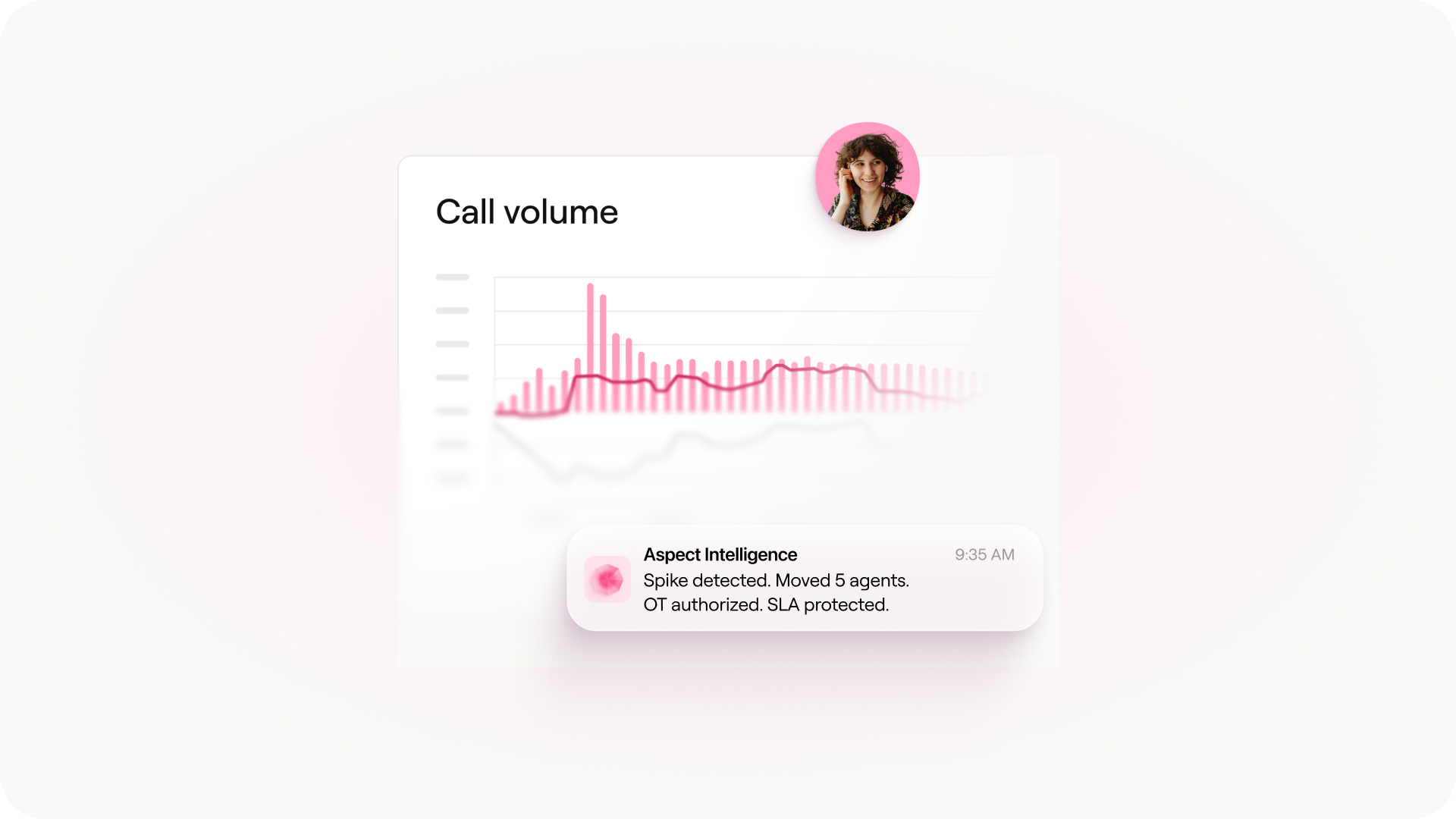
This is where Aspect thinks about the hybrid workforce in its broadest form. The hybrid operation already spans people and the company's own AI, and customers' assistants add another participant to the same system of demand. Aspect Intelligence anticipates demand and flags risk early, when an interval starts drifting from plan in a way the forecast did not expect, and it shows the drivers behind each recommendation so planners can see when a new pattern is forming. The planner decides what to do about it, with the system doing the early detection that keeps a shift in demand from becoming a missed service level.
The cost of missing that early detection is what we call the coordination tax, meaning the hidden price an operation pays in overtime and missed service when the plan and the work fall out of step. A new kind of demand arriving faster than the plan can absorb it is one of the surest ways to raise that tax, and early visibility is how you keep it low.
What this means for your workforce strategy
Customers' AI agents add a demand driver that sits outside every system a contact center controls. Gartner's research points to more requests and thinner customer signal to plan from, and the work that still reaches human agents is likely to skew harder. The operations that handle it well will separate this demand in their data early and staff for the more complex escalations that reach people.
The forecast has always been a model of how customers behave. As more customers delegate that behavior to software, the most useful thing a planner can do is start learning how the software behaves too.
- What is a personal AI agent in customer service?

- Will personal AI agents increase or decrease contact center volume?
- How many customers are willing to let AI contact companies for them?
- How should contact centers forecast AI-initiated contacts?
- What work will still reach human agents when customers use AI assistants?