

Workforce management decides how the single largest controllable cost in a contact center gets spent, and that alone should put it in front of the executives who own the P&L. In most operations labor runs to as much as three quarters of operating costs, which means the daily decisions a planning team makes about staffing, overtime, and coverage move the numbers a CFO reports every quarter. Treating that function as a scheduling back office is a strategic mistake hiding in plain sight.
For a long time workforce management was understood as a technical craft practiced quietly in a corner. Build the forecast, publish the schedule, chase adherence, repeat. That framing made sense when the choices were narrow and the stakes felt local. It does not survive contact with a world where AI is reshaping the cost base, where a forecasting miss shows up directly in margin, and where the difference between a good staffing decision and a poor one is measured in millions. The work has become strategic. The org chart has been slow to notice.
Why is workforce management a strategic function, not just scheduling?
Workforce management is strategic because it governs the largest controllable expense in the operation and directly determines service, cost, and increasingly the customer experience. Every forecast becomes a spending decision. Every schedule commits labor budget. Every intraday call to add overtime or let a queue ride trades cost against service in real time. Those are business decisions with financial consequences, and they happen dozens of times a day.

The leverage is easy to underestimate until you translate it. A small improvement in forecast accuracy is not a technical nicety, it is agents you did not overstaff and service you did not miss, repeated across every interval of every day. Because labor is such a large share of the cost base, even modest planning gains compound into numbers that matter at the board level. This is why the framing is shifting. Workforce leaders increasingly need a seat alongside the CFO, CTO, and COO, because the decisions they make touch organizational performance and profitability as directly as anything those executives control.
How does poor workforce planning show up on the P&L?
Poor planning shows up as overstaffing that quietly drains budget and understaffing that misses service and pushes customers away, often in the same day. Overstaffing is the more insidious of the two, because it never announces itself. It does not trigger an alarm or generate a complaint. It just sits in the payroll number as agents scheduled against demand that was not there, and because nothing visibly breaks, it can persist for years as an accepted cost.
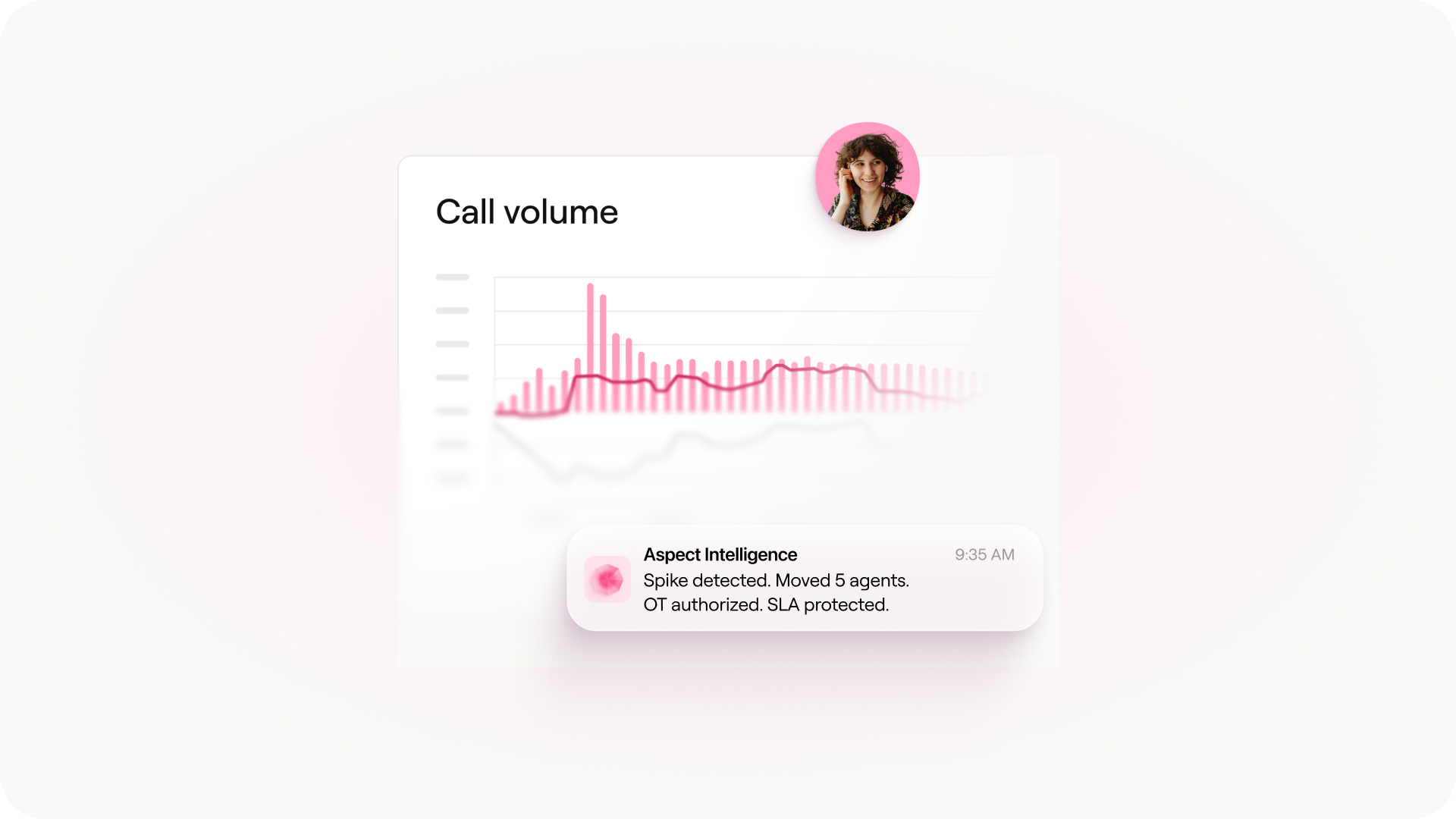
Understaffing announces itself more loudly, through missed service levels, abandoned contacts, and the overtime you scramble to approve once the queue is already underwater. Both failures trace back to the same root, a forecast that did not match the day, and both are expensive. Forecast error also compounds as it moves downstream. A five percent volume miss at the weekly forecast stage does not stay at five percent, because as it propagates through intraday modeling and interval staffing, the downstream misallocation can reach 15 to 20 percent by mid-shift. That is how a small error at the top of the process becomes overstaffed and understaffed intervals in the same operation on the same day.
Why is workforce management getting harder to ignore in 2026?
It is getting harder to ignore because AI is rewriting the cost base and executives are being told to act on it. In a Gartner survey published in February 2026, 91 percent of customer service leaders reported pressure to implement AI this year, and 75 percent reported larger AI budgets than the year before. When leadership is investing heavily in AI and reshaping how work gets handled, the workforce plan is where those investments either pay off or quietly fail, because AI changes the volume, the mix, and the cost of the work all at once.
There is a staffing lesson underneath the AI enthusiasm that executives need to hear from their workforce leaders. Gartner has predicted that by 2027, half of the companies that cut customer service headcount and blamed AI will end up rehiring for similar work under new titles. That prediction tells you the answer to cost pressure is rarely just fewer people. It is better decisions about the people you have, made with a forecast that sees where AI genuinely reduces demand and where it simply changes the shape of it. A workforce leader in the room is how a company avoids the expensive round trip of cutting first and rehiring later.
What does a workforce leader bring to the executive conversation?
A workforce leader brings the connection between operational decisions and financial outcomes that executives need to steer the largest cost in the operation. They can translate a service-level target into a labor cost, model what a promotion or a product launch will do to staffing, and show leadership the tradeoff between cost and service before it gets made rather than after it shows up in a report. That is planning intelligence the C-suite cannot get from a headcount number alone.
This is the thinking behind how Aspect frames workforce intelligence. The value is not only a cleaner schedule, it is turning workforce data into decisions leadership can act on, connecting staffing to the business outcomes executives track. When the workforce plan is visible at the leadership level, the tradeoffs become explicit and deliberate instead of buried in an operational process nobody outside the planning team can see. The planner proposes and models the options, and leadership makes the call with a clear view of the cost and the consequence.

What this means for your organization
The functions that control your largest costs belong in the conversations where those costs are decided. Workforce management has quietly become one of those functions, and the organizations that recognize it will make sharper decisions about where to invest in AI, when to add or hold headcount, and how to trade cost against service deliberately rather than by accident.
The alternative is to keep treating the single largest controllable cost in the operation as a back office task and to keep being surprised by numbers that were decided, unseen, in the forecast. As AI raises the stakes on every one of those decisions, that is a harder position to defend each year.
- Why is workforce management considered a strategic function?

- How does bad workforce planning affect the bottom line?
- Should workforce leaders report to the executive team?
- How is AI changing the role of workforce management?
- Does cutting headcount reduce contact center costs?