

Shrinkage is hard to fix because most teams treat it as one number when it is really two problems with two different solutions. Shrinkage is the paid time your agents are not available to handle work, and it lumps together things you scheduled on purpose, like training and breaks, with things that went wrong, like unplanned absence and system outages. Chase the total and you end up cutting into the planned time that keeps agents functioning, while the unplanned time that actually hurts you carries on unaddressed.
This is why shrinkage feels permanent in so many operations. Leaders see a number in the low thirties, decide it is too high, and start squeezing the visible activities: shorter breaks, fewer coaching sessions, less training. Those are exactly the things that keep agents capable and willing to stay, so the squeeze often makes the real problem, unplanned absence driven by burnout, worse. The number does not move, morale drops, and shrinkage earns its reputation as the thing you can never get on top of. Split it correctly and it becomes a problem you can actually work.
What is the difference between planned and unplanned shrinkage?
Planned shrinkage is the paid non-productive time you schedule deliberately, and unplanned shrinkage is the time you lose to things you did not schedule. Planned covers breaks, meetings, coaching, training, and other activities you build into the roster on purpose. Unplanned covers absenteeism, late log-ins, extended breaks, no-shows, and system outages, the time that disappears without warning and wrecks your coverage in the moment.
The distinction matters because the two have completely different fixes. Planned shrinkage is a scheduling decision. If it is too high, the answer is to schedule those activities more efficiently, move them out of peak intervals, or question whether every recurring meeting earns its place. Unplanned shrinkage is a people and infrastructure problem. If it is too high, the answer is to address why agents are absent or logging in late, which usually traces back to engagement, burnout, or shift design rather than anything a scheduling tweak can solve. Report them as one number and you cannot tell which lever to pull.
Which type of shrinkage should you actually attack first?
Attack unplanned shrinkage first, because it is the half that damages service without warning and the half that signals something deeper is wrong. Planned shrinkage, even when it looks high, is at least predictable. You know the training is happening, you built the schedule around it, and you can staff to cover it. Unplanned shrinkage is the one that turns a well-built schedule into an understaffed afternoon, because the coverage you counted on simply does not show up.
Unplanned absence also tells you something a scheduling report cannot. Chronic Monday absenteeism is rarely a discipline problem. It is usually a symptom of disengagement, burnout, or a shift pattern that people cannot sustain. Treating it as a compliance issue, with stricter policies and more monitoring, addresses the symptom and misses the cause, which is why the number keeps coming back. The operations that actually reduce unplanned shrinkage tend to fix the root, improving shift design and engagement, rather than policing the outcome.
How do you reduce shrinkage without hurting agents?
You reduce it by targeting the internal, automatable time drains and the root causes of absence, not by cutting the breaks and development time that keep agents healthy. A large share of avoidable shrinkage hides inside after-call work, disposition tagging, and call summaries, tasks that can consume 10 to 20 percent of an agent's paid time and that automation can shrink without taking away anything agents value. That is capacity reclaimed with no morale cost, which is the opposite of squeezing breaks.
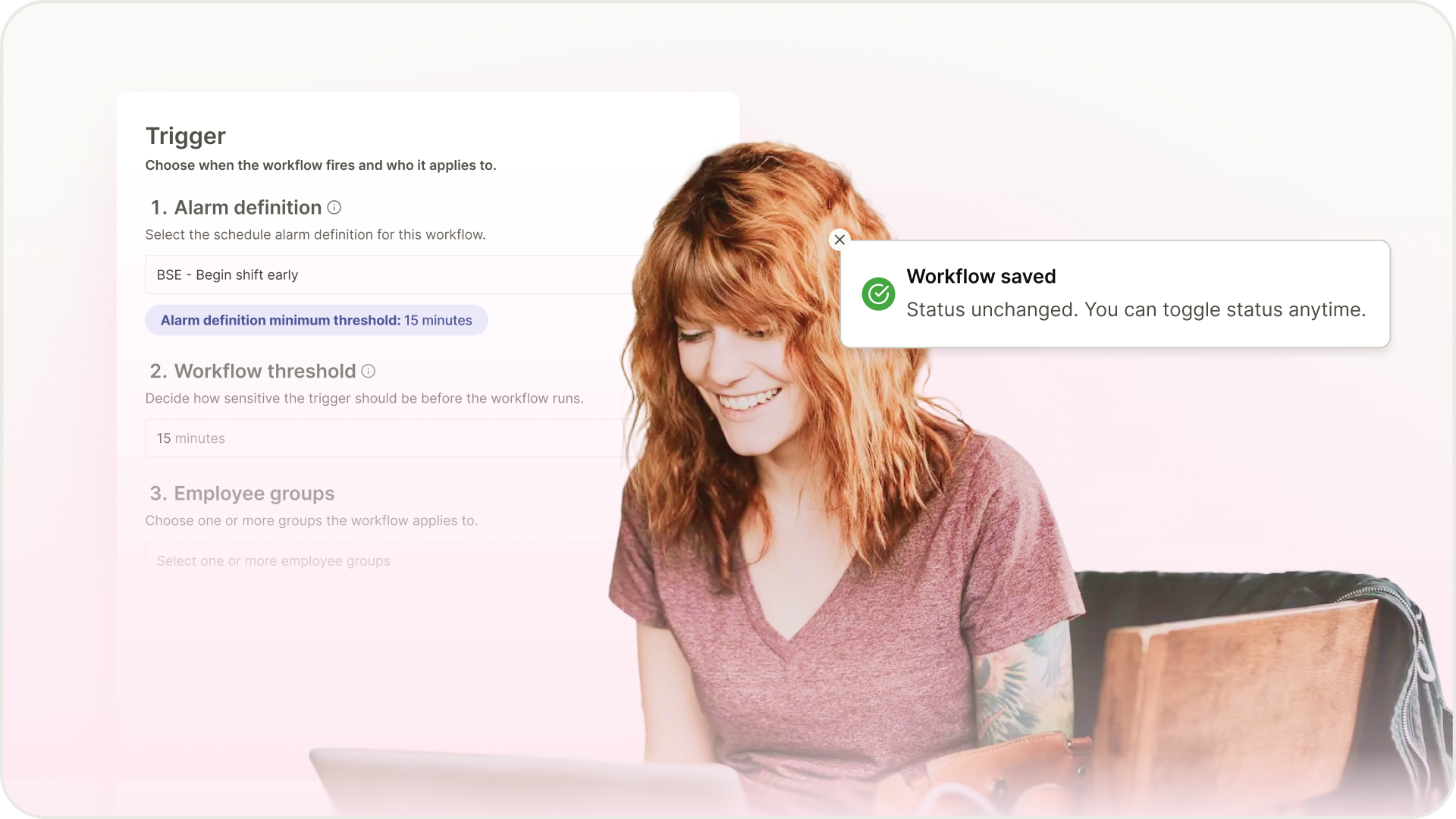
The other half of the answer is protecting adherence in real time rather than auditing it after the fact. Real-time adherence visibility catches a late log-in or an extended break while the day is still recoverable, so a supervisor can act before a handful of small deviations compound into a missed service level. The point is not to micromanage. It is to see the gap forming early enough to close it gently, rather than discovering it in a post-shift report when the damage is already done. Coaching should then focus on the drivers behind the pattern, not on the metric itself, because an agent lectured about an adherence percentage learns nothing about why they keep running late.
How does better forecasting reduce shrinkage in the first place?
Better forecasting reduces shrinkage by building all of it into the plan, so the time is accounted for before the day begins rather than discovered as a gap. Most operations badly underestimate how much shrinkage they actually carry, and a schedule that assumes agents are available when a chunk of them are in training or on unplanned absence is a schedule that was wrong before anyone logged in. When every planned activity is in the forecast and unplanned patterns are modeled from history, the staffing plan reflects reality instead of an optimistic version of it.
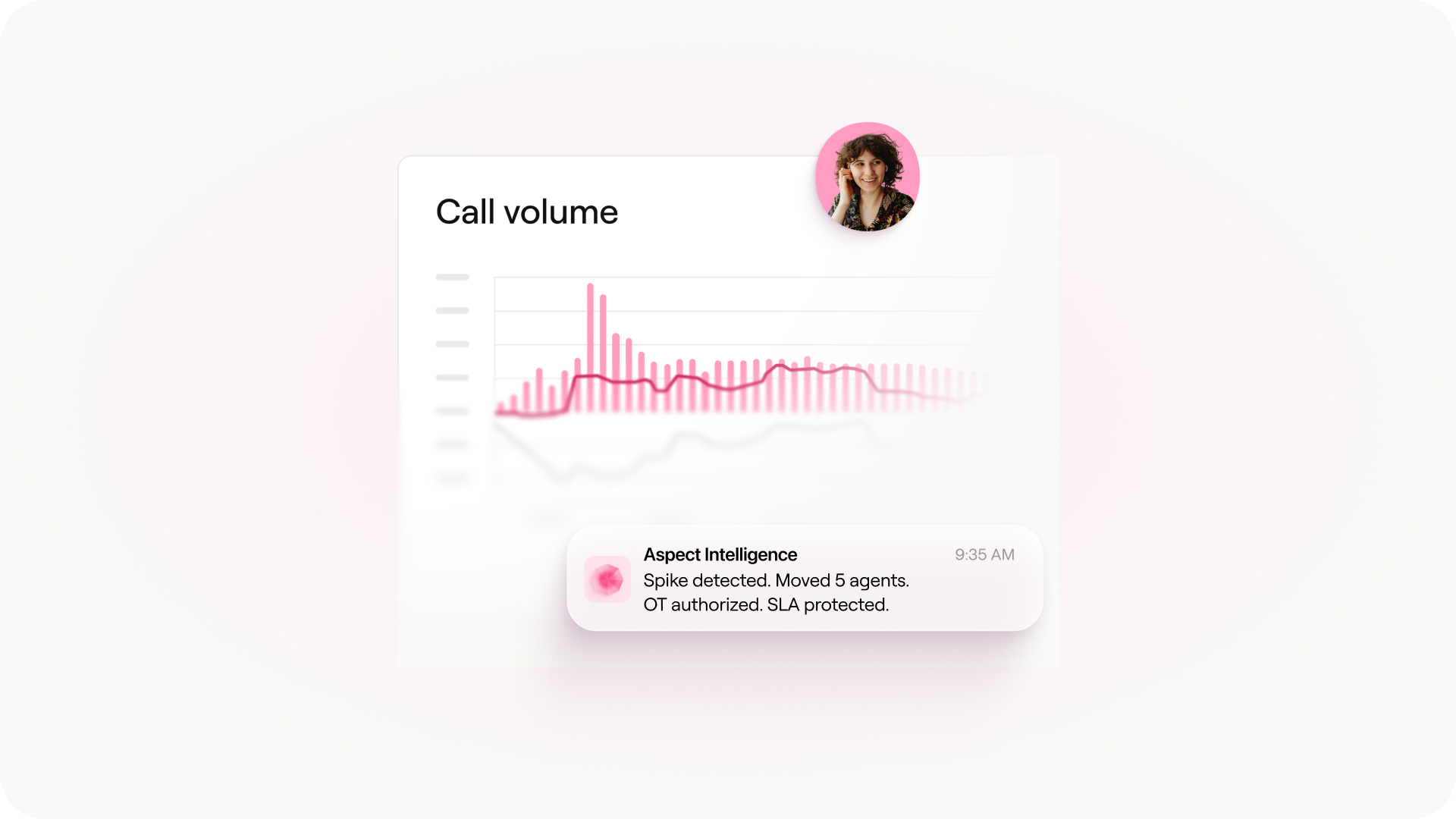
This is where Aspect thinks about shrinkage as a forecasting and intelligence problem, not just a policy one. Aspect Intelligence watches the signals that lead to a coverage gap and flags risk while there is still room to act, which turns shrinkage from a number you explain after the fact into a risk you manage during the day. The planner stays in control, seeing where the day is drifting and choosing the response, with the system doing the early detection that makes an intervention possible while it still matters.
What this means for your workforce strategy
Shrinkage stops being an unsolvable problem the moment you stop treating it as one number. Separate the planned from the unplanned on every report, target unplanned absence at its root rather than its symptom, automate the internal time drains, and build all of it into the forecast. Do that and the same number that felt permanent becomes a set of specific, fixable problems.
The operations that get this right do not run the leanest breaks or the strictest attendance policies. They run the clearest picture of where their paid time actually goes, and they spend their effort on the half of shrinkage that is genuinely costing them service.
- What is a good shrinkage rate for a contact center?

- What is the difference between planned and unplanned shrinkage?
- Which shrinkage should I reduce first?
- Can automation reduce shrinkage?
- Why does cutting breaks fail to reduce shrinkage?