

WFM Was Built for a Different World
Traditional WFM operated on a simple model:
Forecast → Schedule → Execute
This worked when humans handled all demand, workflows were predictable, and volume followed historical patterns. AI has changed each of those assumptions.
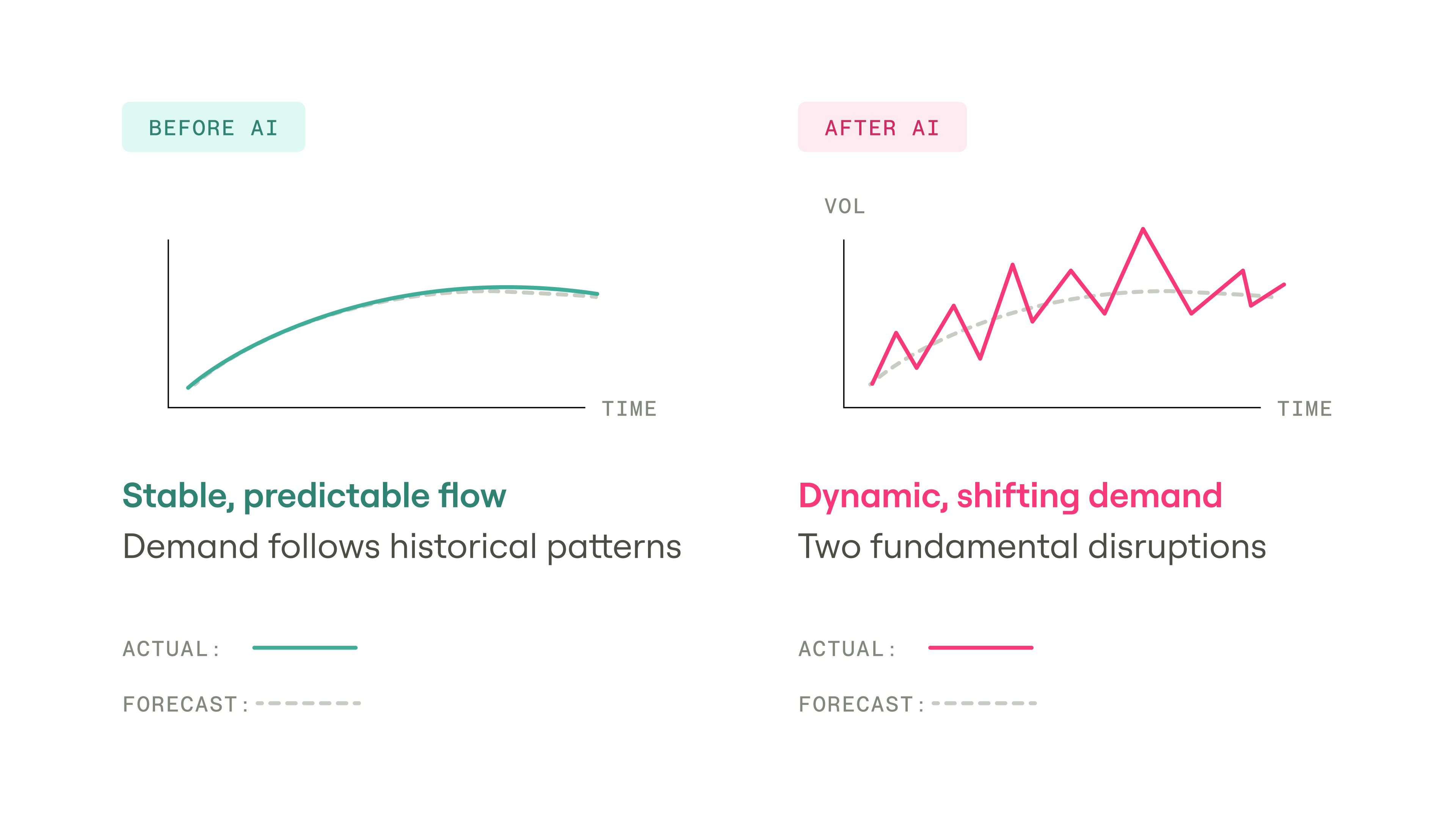
AI doesn't just automate tasks, it reshapes demand before it ever reaches human agents. Bots resolve Tier 1 issues upstream, automation handles cross-system workflows, and what remains for humans is increasingly complex, escalated, and emotionally nuanced. Traditional intraday management, once fairly predictable, is now highly volatile.
At the same time, traditional performance metrics are quietly becoming misleading. AHT rises, not because agents are less efficient, but because the easy work is now handled by AI. Forecasting models break because they only see queue arrivals, not total demand. KPI drift is happening across every traditional metric, and organizations that don't recognize it will misinterpret performance, incentivize the wrong behaviors, and undervalue the impact of AI.
Beyond Forecast Accuracy
The argument is clear: a high accuracy score can still be a misleading one. A forecast that scores 92% overall can simultaneously hide dangerous volatility in specific intervals, mask skill-coverage gaps, expose the organization to labor cost overruns, and fail to warn of service risk before it materializes.
The challenge facing WFM leaders today is not a data problem, it is a decision latency problem. Organizations have more data than ever, yet they are still making staffing and scheduling decisions too slowly and with too little confidence.
The Collapse of Linear Planning
Traditional forecasting operated on a linear model:
Forecast → Schedule → Execute
This assumed demand was stable, patterns were historical, and the forecast was the final answer. Adding AI agents breaks all three assumptions:
- AI agents and automation shapes demand before it reaches the queue: bots resolve Tier 1 interactions upstream, so the forecast model only sees what escapes automation.
- Non-linear demand means volume surges and dips no longer follow historical curves.
- Continuous mid-day change renders a morning forecast stale by afternoon.
The result is that organizations relying on static accuracy scores are optimizing for a world that no longer exists.
The Invisible Work Problem
One of the most consequential blind spots in modern WFM is that AI-handled interactions are largely invisible to the forecast model. When a bot resolves an interaction, that demand event never enters the queue, and never informs the staffing plan. Automation steps are not counted as labor. This means:
- Forecast inputs are systematically incomplete.
- Containment rate changes create unexplained spikes in human-handled volume.
- Planners are flying without a full picture of total demand.
It is impossible to optimize what cannot be seen, and AI continues to handle more of the work.
From Accuracy to Decision Readiness
The fundamental reframe of what forecasting success looks like:
A useful forecast is one that prompts useful action, not just one that's accurate.
Leading organizations are shifting from chasing accuracy percentages to building decision readiness: the ability to understand forecast confidence, model uncertainty, and act faster when volatility materializes. Key questions this framing surfaces:
- When does forecast error cost you the most and is that where your accuracy metrics are focused?
- What's more valuable: a forecast that's 90% accurate, or one that warns you about the 10% of times when things go sideways?
- Have you ever had a 95% accurate forecast that still led to bad decisions?
This shift reorients the goal from prediction to adaptation, moving from:
Predict → Staff → React
to:
Sense → Decide → Adapt (continuously)
Scenario-Based Planning as the New Standard
Because AI introduces demand volatility that historical data cannot anticipate, the response is scenario-based decision-making, building confidence intervals and what-if models that help leaders understand risk, trade-offs, and options before uncertainty materializes.
Rather than a single point forecast, intelligence-driven forecasting surfaces:
- Confidence levels attached to each forecast interval
- Volatility signals that flag high-risk periods before they arrive
- Scenario comparisons that quantify the cost of being wrong — and the cost of over-correcting
Customers leveraging this approach have seen up to 15% improvement in forecast accuracy and meaningful reductions in both over- and under-staffing exposure.
Human + AI Orchestration
The central shift is a reframing of what WFM now means:
WFM is no longer about optimizing humans. It's about orchestrating humans and AI together.
In this hybrid model:
- AI is scalable, always available, handles routine and data-heavy tasks, and continuously improves.
- Humans handle complexity, judgment, empathy, edge cases, and high-value interactions, and provide oversight and training for AI.
- WFM must now account for containment rates, escalation patterns, automation quality, and journey outcomes, not just interaction counts.
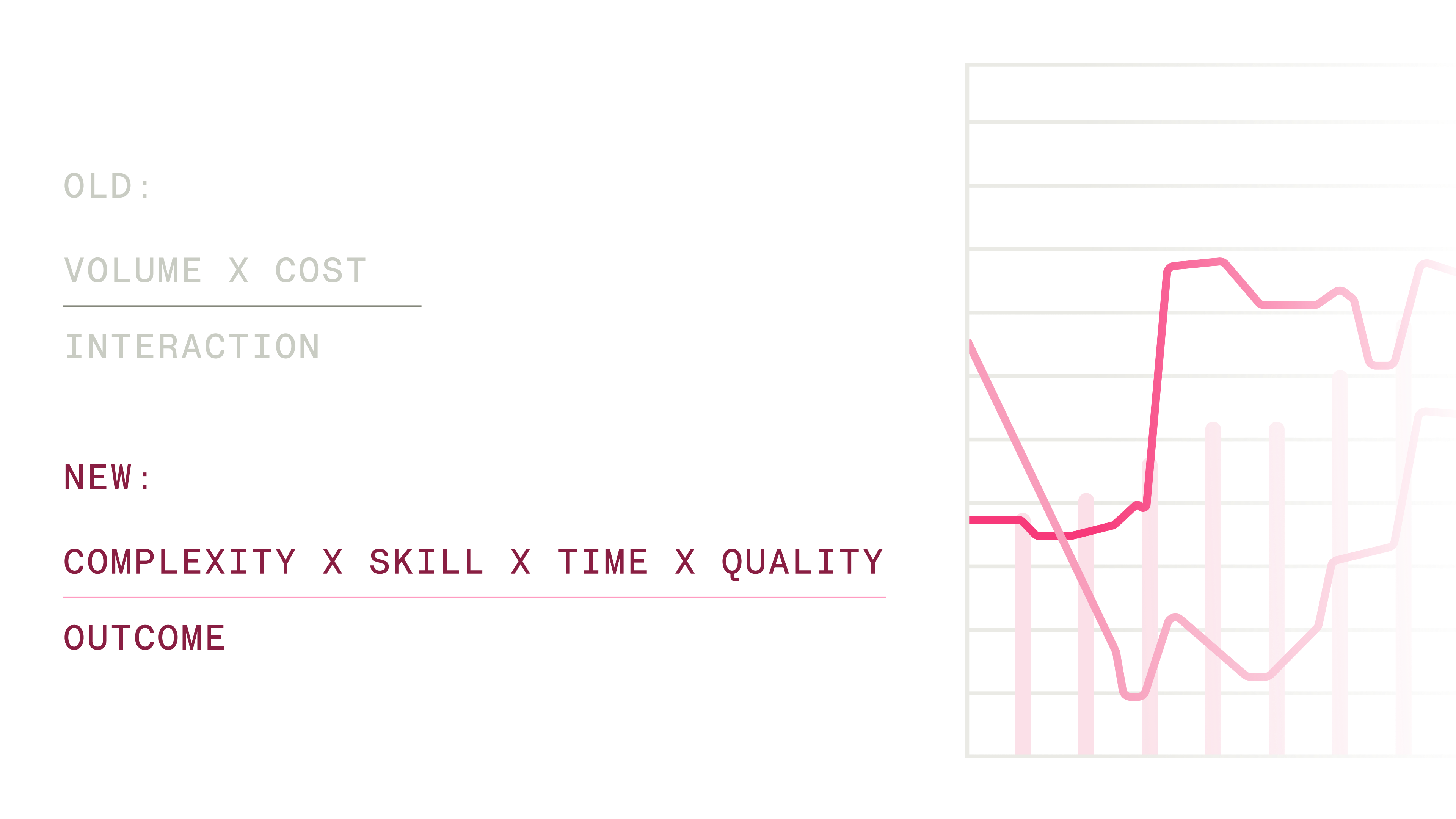
This shift changes the cost model too:
Old: Volume × Cost/interactionNew: (Complexity × Skill × Time × Quality) / Outcome
Five Forces Reshaping WFM Performance
- AI Containment reshapes demand: What reaches humans is more complex, less predictable, and harder to measure with traditional tools.
- CX Automations fragment workflows: Work is no longer a linear interaction. It's a modular journey distributed across AI, humans, and back-end systems.
- Agentic AI introduces real-time decisioning: AI actively participates in interactions moment to moment, making effort unpredictable even for equally skilled agents.
- AI + Hybrid Work break traditional controls: Rigid adherence metrics conflict with the flexibility needed to respond to AI-driven complexity.
- The agent becomes a distributed specialist: Human agents are evolving from queue-based generalists into judgment-intensive specialists working across journeys.
The Answer: Workforce Intelligence
The answer is Workforce Intelligence, a continuous, AI-aware operating model that makes the entire system visible and actionable.
From an operational standpoint, this means:
- Continuous reforecasting that incorporates AI containment rates, escalation patterns, and automation performance, not just historical call volume.
- Dynamic staffing that allocates work across AI and humans based on live conditions, answering "Where should work go right now?" rather than "How many people do I need?"
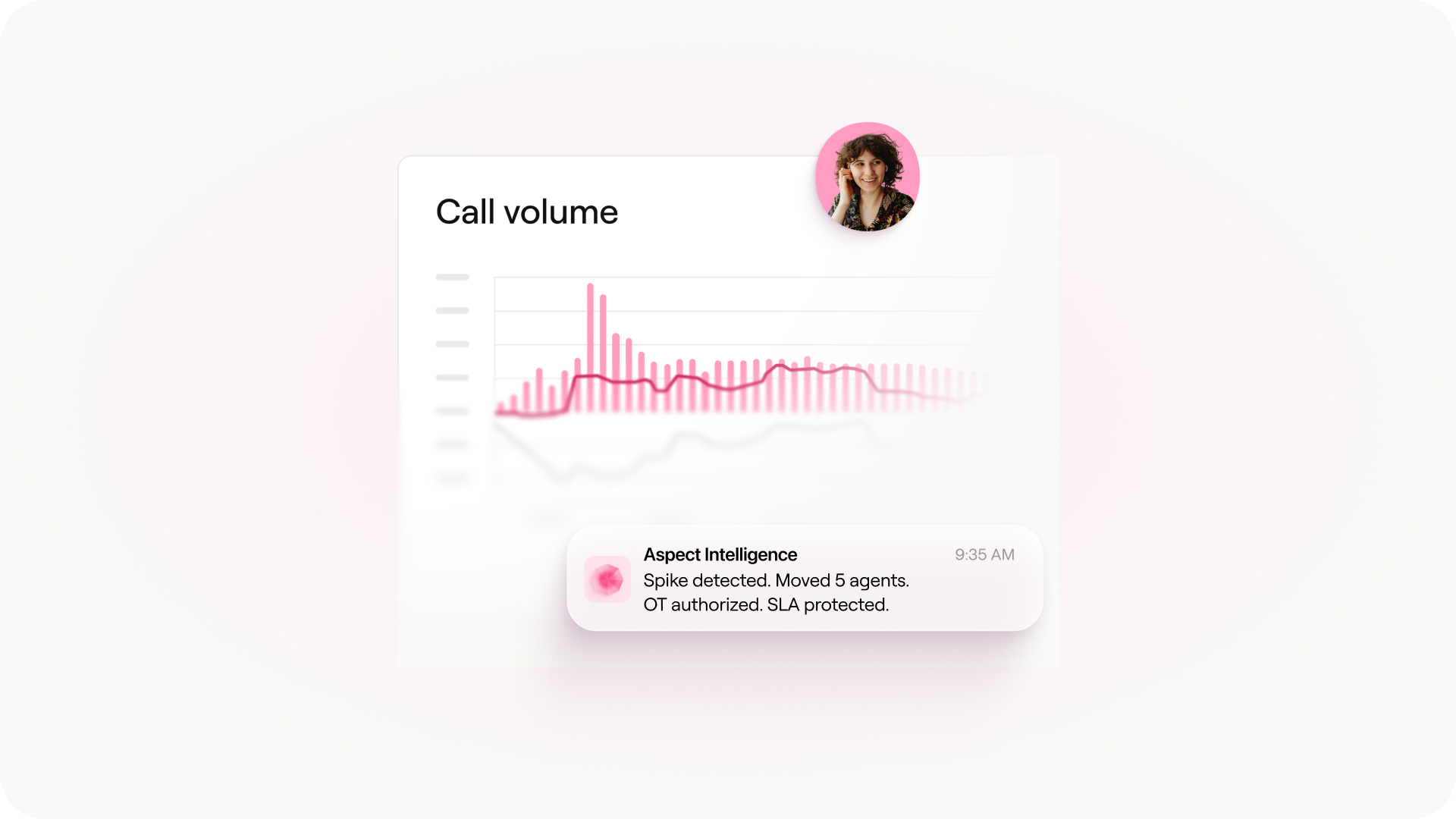
- Automated intraday management that detects changes in real time and adjusts, reducing service volatility by up to 50% and recovering up to 14 hours per month in idle time.
From a measurement standpoint, this means deploying new AI-specific leading indicators:
- AI containment rate volatility: sudden changes are the first sign of trouble.
- Bot-to-human escalation patterns: rising or clustered escalations signal AI gaps.
- AI resolution quality vs. recontact rate: divergence reveals hidden failure.
These leading indicators allow WFM leaders to see problems before customers feel them.
Redefining the KPIs That Matter
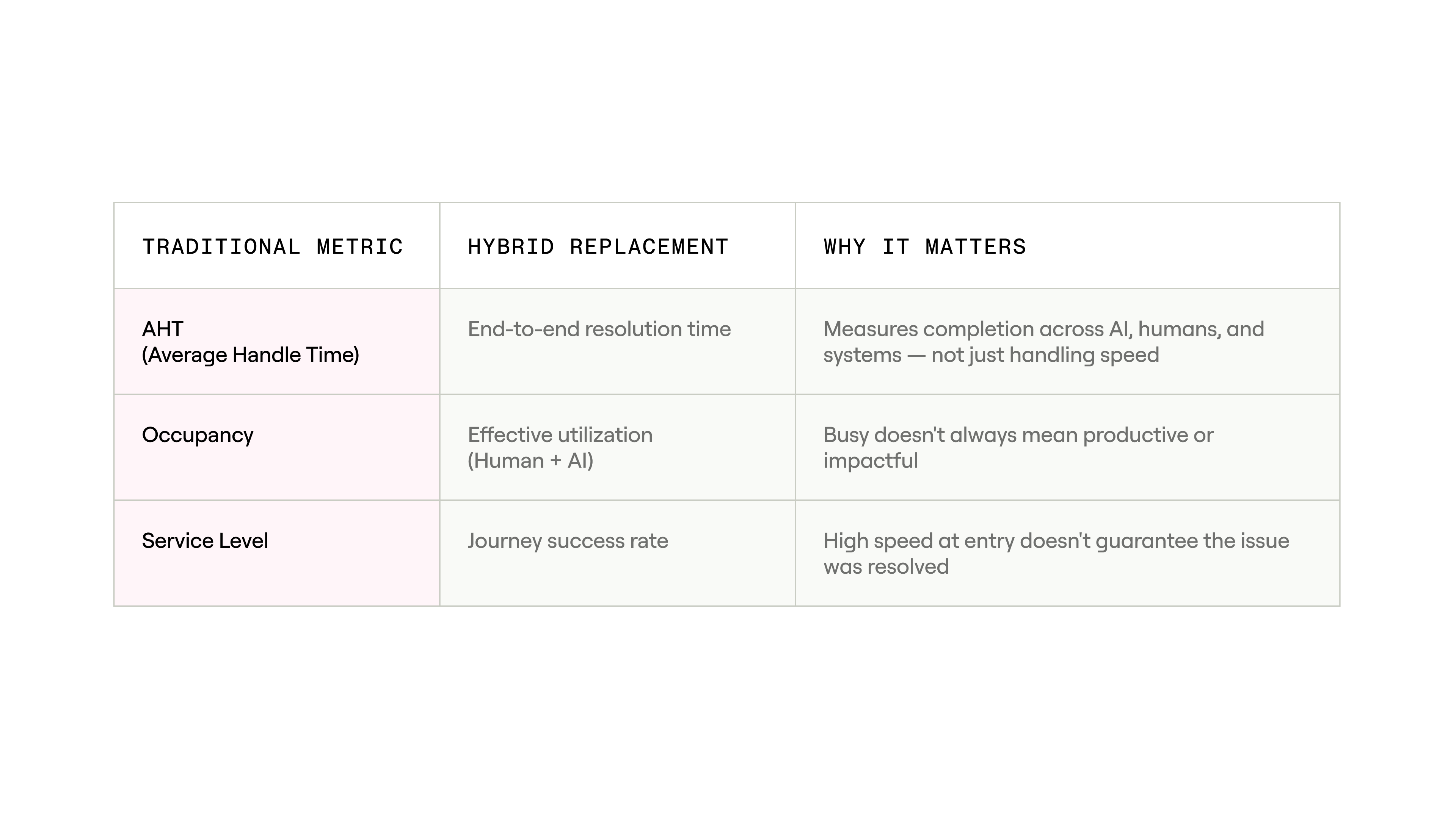
Traditional MetricHybrid ReplacementWhy It MattersAHT (Average Handle Time)End-to-end resolution timeMeasures completion across AI, humans, and systems — not just handling speedOccupancyEffective utilization (Human + AI)Busy doesn't always mean productive or impactfulService LevelJourney success rateHigh speed at entry doesn't guarantee the issue was resolved
The mindset shift: stop optimizing for Speed, Volume, and Efficiency. Start optimizing for Outcomes, Effectiveness, and End-to-end Success.
WFM Maturity in the AI Era
Most organizations today fall between the first two stages of this maturity model:
- Reactive: Human-only visibility, lagging KPIs, no AI integration.
- Augmented: AI assists decisions; partial integration with insights and recommendations.
- Adaptive: Real-time recalibration; integrated human + AI visibility; dynamic staffing.
- Autonomous: AI-driven orchestration; end-to-end optimization; self-adjusting operations.
Reaching the Adaptive stage, and beyond, is increasingly the competitive differentiator.
Key Takeaways
- AI hasn't reduced demand, it has redistributed it. Interactions reaching humans are fewer but far more complex.
- Traditional WFM metrics aren't just incomplete, they can be actively misleading in a hybrid workforce environment.
- A useful forecast is one that prompts useful action, not just one that's accurate. The shift is from prediction to adaptation.
- Workforce Intelligence is the connective tissue that links automation systems, WFM platforms, and business outcomes into a continuous feedback loop.
- The modern WFM leader must ask new questions: Where is AI helping vs. creating rework? Did we resolve the full issue? What percentage of work is invisible to WFM?
- You cannot manage what you can't see, and workforce intelligence makes the entire system visible.