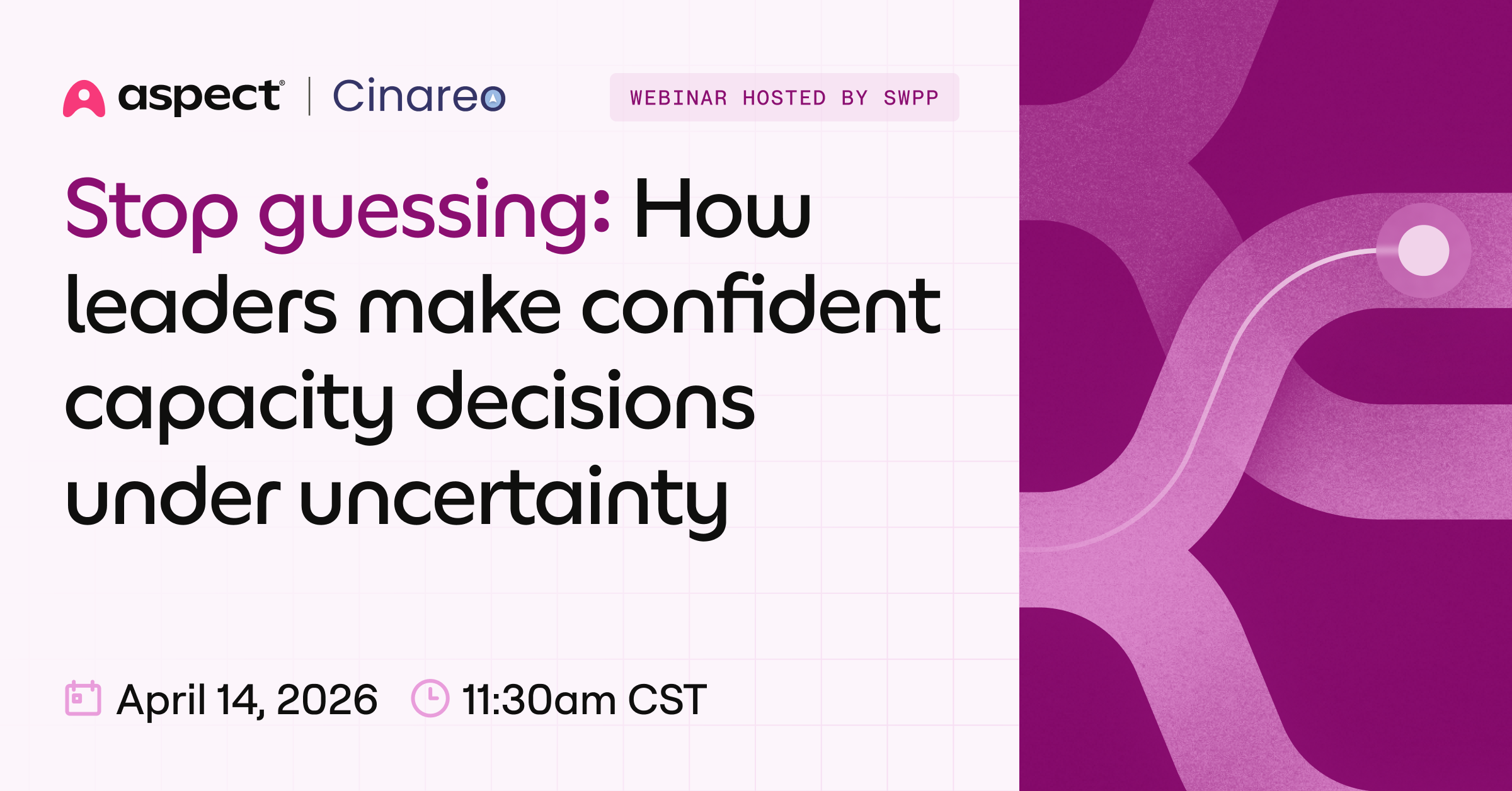
Rebuilding Capacity Planning in the AI Era
AI is changing contact center demand, but fewer routine interactions do not necessarily mean less work. Human agents are handling more complex, sensitive, and mentally demanding cases, while escalations and repeat contacts can obscure the true impact of automation.
In this webinar, Aspect and The Forum, with perspectives from Call Design and Vitality, explore why traditional capacity models need to evolve. Learn how to plan for AI and people together, understand shifting workloads, and use scenario planning to make better staffing decisions as conditions change.
Pain Points
- Traditional models rely on contact volume and average handle time without fully accounting for AI’s impact.
- Lower contact volumes can mask greater complexity and cognitive load for human agents.
- AI-to-human handoffs and repeat contacts make the true workload harder to understand.
- Uncertainty around AI adoption makes staffing and capacity assumptions difficult to maintain.
- Limited planning resources and unclear cross-functional ownership slow adaptation.
Key Takeaways
- How to build a capacity model that accounts for both AI-handled and human-handled work.
- Why interaction complexity and employee well-being matter alongside volume and handle time.
- What to measure across the customer journey to uncover hidden workload and friction.
- How scenario planning and more frequent reviews help teams adapt as AI adoption evolves.
- Why shared ownership across planning, operations, technology, finance, and customer experience is essential