


The gap between an AI demo and AI that actually runs your floor is governance, and most contact centers are stuck in that gap right now. A vendor shows you an impressive agent that rebuilds the week's schedule in seconds, everyone in the room nods, and then the rollout stalls, because the people who own risk and operations start asking what happens when the model is wrong at two in the afternoon with four hundred agents affected.
That hesitation is rational, and the numbers back it up. In a Harvard Business Review report covered by Fortune in December 2025, only 6 percent of companies said they fully trust AI agents to run core business processes autonomously, which tells you that being excited about AI and being willing to hand it the keys are two very different states. You close that gap with a governance model that lets AI do real work while a human keeps the authority to see and change what it does.
Governance is what lets you take your foot off the brake. Once you can prove what the system is allowed to do and how you would catch a bad decision before it reaches a customer, the deployment that was stuck for a quarter starts to move. This playbook is how you build that.
What does AI governance actually mean in a contact center?
AI governance is the set of rules, approvals, and records that define what an AI system may do on its own, which decisions it may only recommend, who can approve the rest, and how every action gets logged so you can review it later. In a contact center that means being explicit rather than vague about the boundary between what the system does automatically and what a planner or supervisor signs off.
Without that clarity, each team wires AI into its own corner. The forecasting group tries one assistant, the intraday desk experiments with another, a team lead starts trusting a recommendation nobody validated, and now you are paying coordination costs on top of the ones you already had, because the workforce decisions that used to be made in silos are now being made in silos by machines. Governance is the shared rulebook that keeps AI-augmented planning pointed in one direction instead of four.
What should contact centers automate with AI first?
Start with high-frequency, low-consequence tasks where a wrong answer is cheap to catch and easy to reverse. Wrap-up summaries after a call, first-draft forecasts that a planner reviews before anything is committed, low-stakes intraday nudges like moving an offline activity out of a busy interval, and knowledge lookups that help an agent find the right answer faster all fit this description, because a mistake surfaces quickly and rarely costs much.
Hold the line on anything autonomous that moves real money or reshapes an agent's day until you have evidence the system is reliable in your environment. The maturity ladder runs from assisting a human, to recommending an action a human approves, to acting automatically inside tight limits, and you climb it one rung at a time as the data earns your trust. Gartner expects 40 percent of enterprise applications to include task-specific AI agents by the end of 2026, up from less than 5 percent in 2025, so the pressure to move fast is real. The teams that move fast without blowing up are the ones automating the boring, reversible work first and proving it before they touch the schedule.
How do you keep AI from creating operational chaos in WFM?
You keep it inside policy-aware guardrails, so the system can only act within limits you have defined, and anything beyond those limits becomes a recommendation instead of an action. Chaos in workforce management almost always comes from an autonomous change that ignores a constraint a human planner would never have broken, for instance a union work rule, a required skill for a queue, a maximum overtime threshold, or a minimum rest period between shifts.
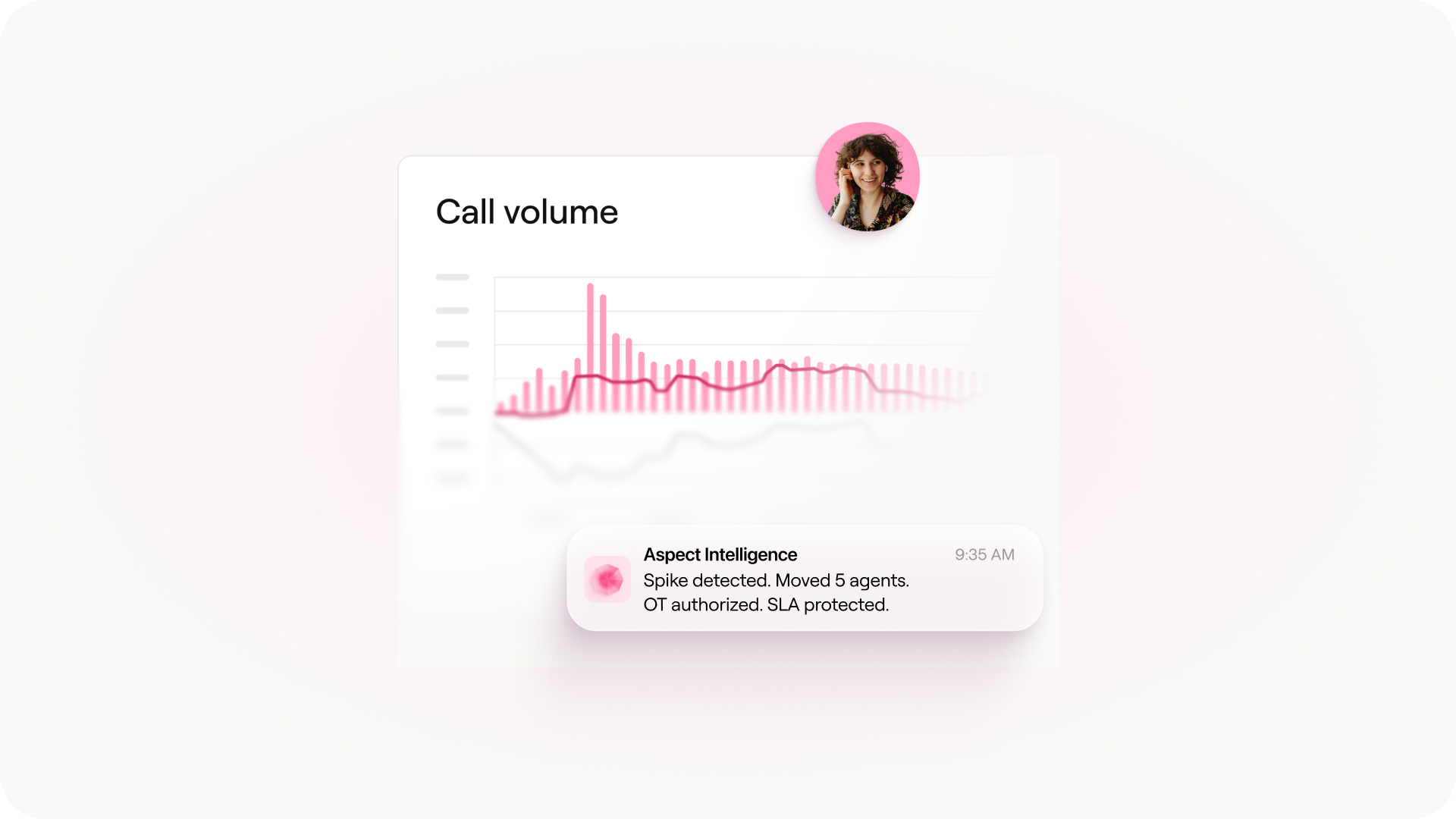
The fix is to encode those constraints as policy the automation has to respect, and to make the system show its work. When Aspect Intelligence proposes a schedule change or an intraday move, it operates inside the same rules and permissions that govern the rest of the application, which means the automation cannot quietly do something your policies forbid. That is the practical meaning of guided intelligence. The system is fast, and it is also fenced.
Who should sign off on an AI-driven schedule change?
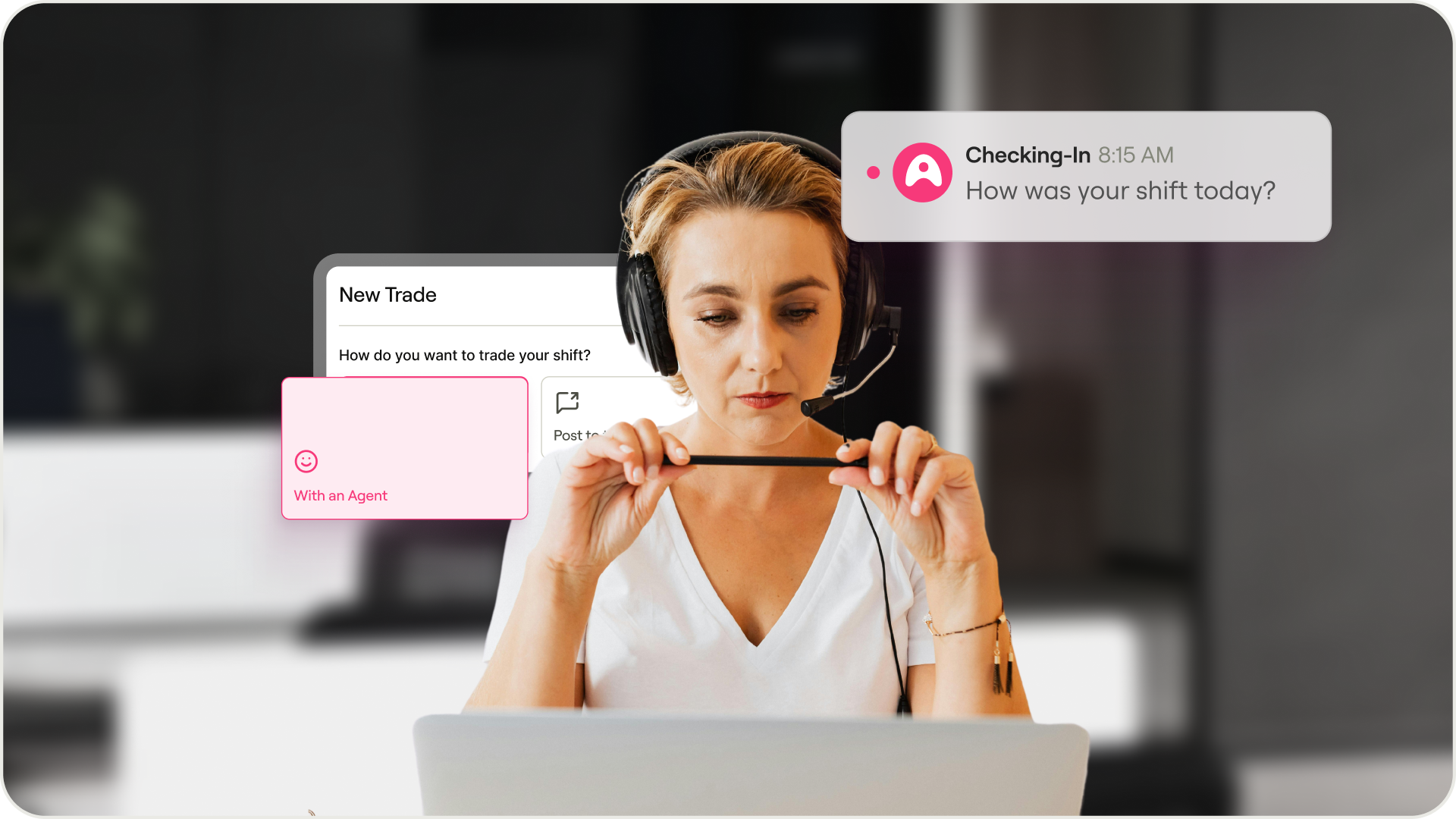
A human with authority over the affected team should approve any AI-driven change that alters pay, breaks a scheduling rule, or changes a customer-facing outcome, and the standard I hold to at Aspect is that a person reviews any AI decision that touches a customer. Lower-risk changes that stay inside defined limits can run automatically, because forcing a manager to rubber-stamp every trivial nudge just recreates the bottleneck you were trying to remove.
The way to make this workable is to set thresholds in advance rather than deciding case by case under pressure. Decide, while everyone is calm, which changes are small enough to automate and which cross the line into needing a signature, write those thresholds down, and let the system route decisions accordingly. That is how you keep a human in the loop without turning approval into a full-time job.
How do you prove your contact center AI is safe to auditors and risk teams?
You prove it with an audit trail that records every AI action, the data behind it, the policy that allowed it, and the human who approved it. Risk and security teams do not want assurances, they want records they can inspect after the fact, and an AI deployment that cannot explain why it did what it did will not survive contact with a serious compliance review.
This is not a fringe concern. Deloitte Digital's contact center research found that leaders falling behind cite data security and compliance among their top challenges, named by 53 percent, alongside legacy systems at 58 percent, which tells you the audit and integration questions are already sitting on the desk of the people you need to win over. The MIT Sloan Management Review and BCG study published in November 2025 found that agentic AI reached 35 percent adoption in just two years, with organizations adopting it well before they had a strategy in place, and the governance-first teams are the ones who will still be standing when that gap catches up with everyone else. Build the audit trail before you need it, because the moment you need it is the moment it is too late to start.
- What is AI governance in a contact center?

- Is it safe to let AI change agent schedules automatically?
- What contact center tasks are safe to automate with AI first?
- How do you keep a human in the loop without slowing everything down?
- What records do I need to pass an AI audit?