


At CCW Las Vegas last week, almost everything was about automating the conversation. Customer service bots. Voice AI. Real-time summarization. Sentiment analysis on every call. Walk the show floor and you'd be forgiven for thinking the contact center had been solved.
It's a real opportunity, and the investment is real. But it's saturated. And it's only a third of the equation.
Where five years of AI investment actually went
The numbers tell a clearer story than the booths did. According to Gartner's 2026 research, 91% of customer service and support leaders are now under executive pressure to implement AI. TechIntelligence reports that 46% of businesses have concentrated more AI investment in a single customer-facing function (sales, service, or marketing) than anywhere else in the business. And research from AmplifAI found that only 25% of contact centers have successfully integrated AI into their daily operations.
Read that last number again. After five years of headlines, keynotes, and budget cycles, three out of four contact centers own AI tools they haven't actually operationalized.
AmplifAI's analysis is explicit about why: most organizations are adopting AI faster than they can integrate it into the coaching, quality processes, and workforce management systems that actually determine service outcomes. The AI is on the call. It's not in the operation.

Three layers, not one
The contact center isn't one layer. It's three.
The first is the conversation. The customer reaching out, the agent responding, and everything in between. This is where the spend has gone. Chatbots, voice AI, IVR routing, agent assist, summarization, sentiment scoring, QA automation. The conversation is saturated.
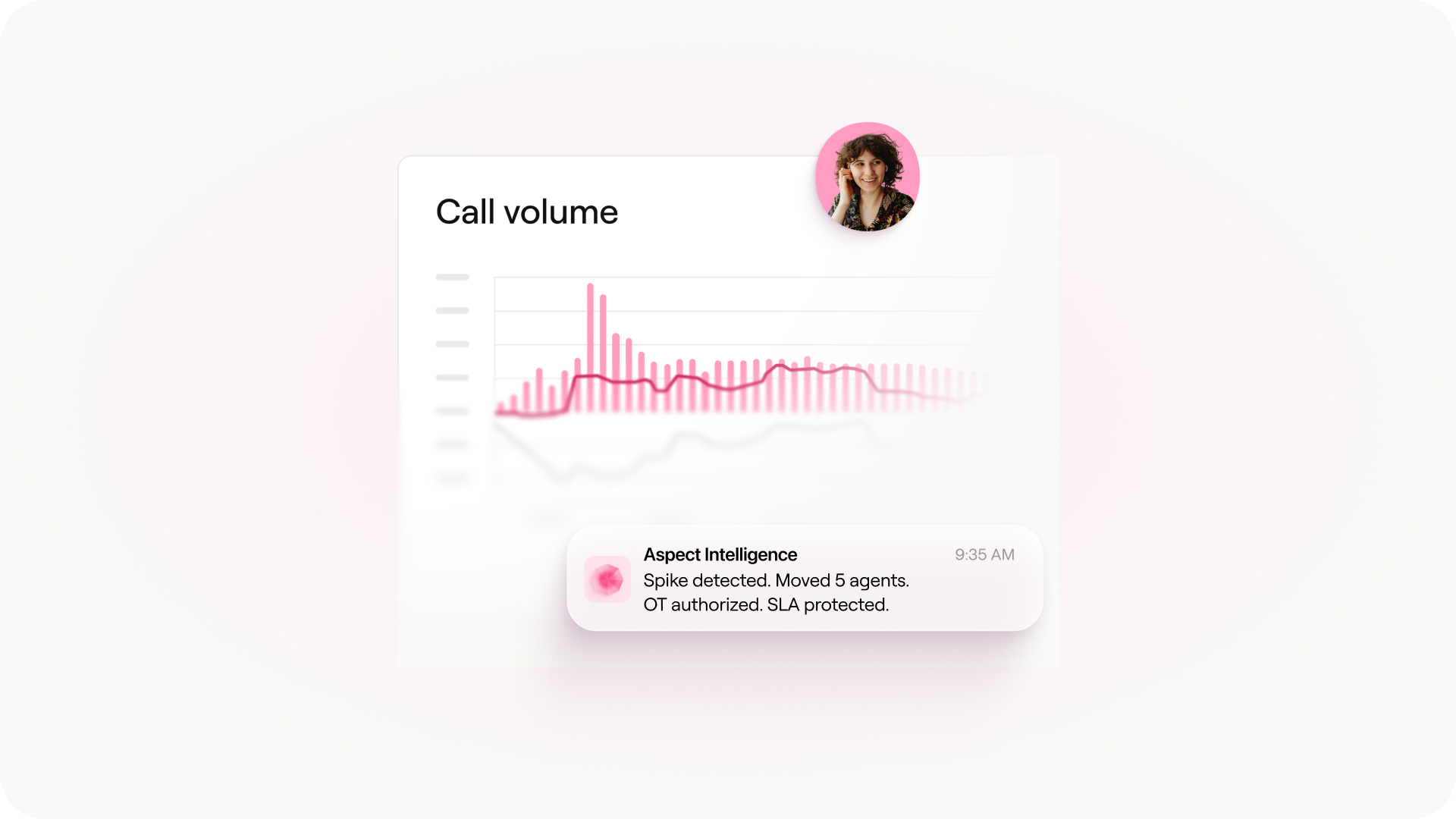
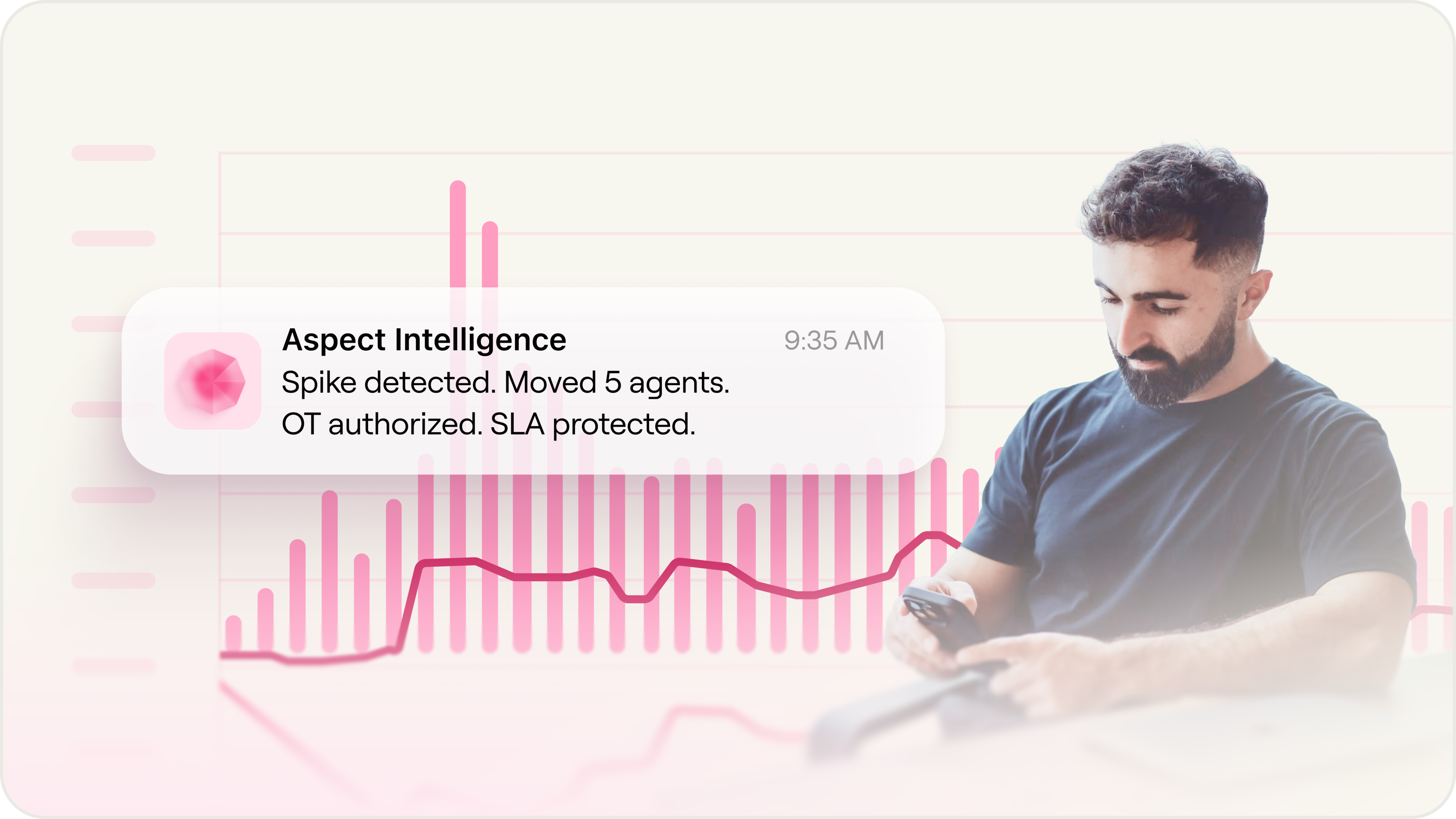
The second is the operation. The supervisors, planners, real-time analysts, and WFM teams who run the floor behind the agents. Forecasting, scheduling, intraday decisions, vendor management, reporting, capacity planning. This is where AI has started, but barely. Most of this work still runs through spreadsheets, dashboards, and the muscle memory of a few experienced people.
The third is the work. The back office that sits alongside the contact center but rarely gets counted as part of it. Claims processing, case management, loan operations, underwriting, knowledge work of every kind. AI has not really shown up here at all, despite the fact that these teams are larger, more expensive, and arguably more sensitive to the same operational dynamics that WFM has been solving in the contact center for thirty years.
The fluency gap
The temptation is to call this a maturity problem. It isn't.
Contact center leaders are not behind on AI. They've been deploying it in production for years. They are fluent in AI for the conversation. They know how to evaluate a voice AI vendor, how to tune a chatbot, how to think about agent assist. That fluency took five years to build and it's real.
What they're not yet fluent in is AI for the operation, or for the work behind it. Not because the technology isn't there, but because the conversation has absorbed so much oxygen that the layers behind it haven't had room to develop.
That's the fluency gap. And it's the most interesting business problem in the contact center right now, because it's the one with the most ground left to cover.
What the next five years will probably look like
The next phase of AI in this industry will be quieter than the last one. It won't show up as another vendor with a customer-facing bot. It will show up as the people running the operation getting answers they used to spend hours building. It will show up as workflows that used to require a supervisor's full attention running themselves against the rules that supervisors wrote, with the supervisor approving rather than executing. It will show up as the back office finally being treated like the contact center: forecastable, schedulable, optimizable.
It will not look like a demo. It will look like a quieter Friday afternoon and a planner who left work on time.
What the bottom two layers reward
A few things are worth being honest about, because the bottom two layers are not the top one and they don't reward the same approaches.
The conversation rewards speed and scale. A chatbot that handles 60% of contacts is a clear win. The operation does not reward speed and scale in the same way. A scheduling decision made faster but against the wrong policy is worse than no decision at all. A forecast that's confidently wrong is more dangerous than a forecast that's transparently uncertain. The bottom two layers reward judgment, governance, and explainability above raw automation.
This is why the AI conversation in WFM and the back office is going to sound different from the AI conversation in customer service. It has to. The work is different, the consequences are different, and the people doing the work have a much lower tolerance for systems they can't audit.
The good news is that the operational rigor the WFM industry has built over thirty years (policies, approvals, audit trails, rule-aware automation) is exactly the foundation this kind of AI needs. The bad news is that almost none of the AI investment to date has been built on that foundation.
That's the work ahead.

Where to start
If you're a contact center leader walking out of CCW thinking about where to put your next AI dollar, the most useful question isn't "which vendor has the best demo." It's "which layer am I underinvested in." For most teams, the answer is the second and third.
The conversation has had its AI moment. The operation behind it, and the work behind that, haven't. The teams that move first into those layers will spend the next five years pulling ahead of the ones still optimizing their chatbot.